
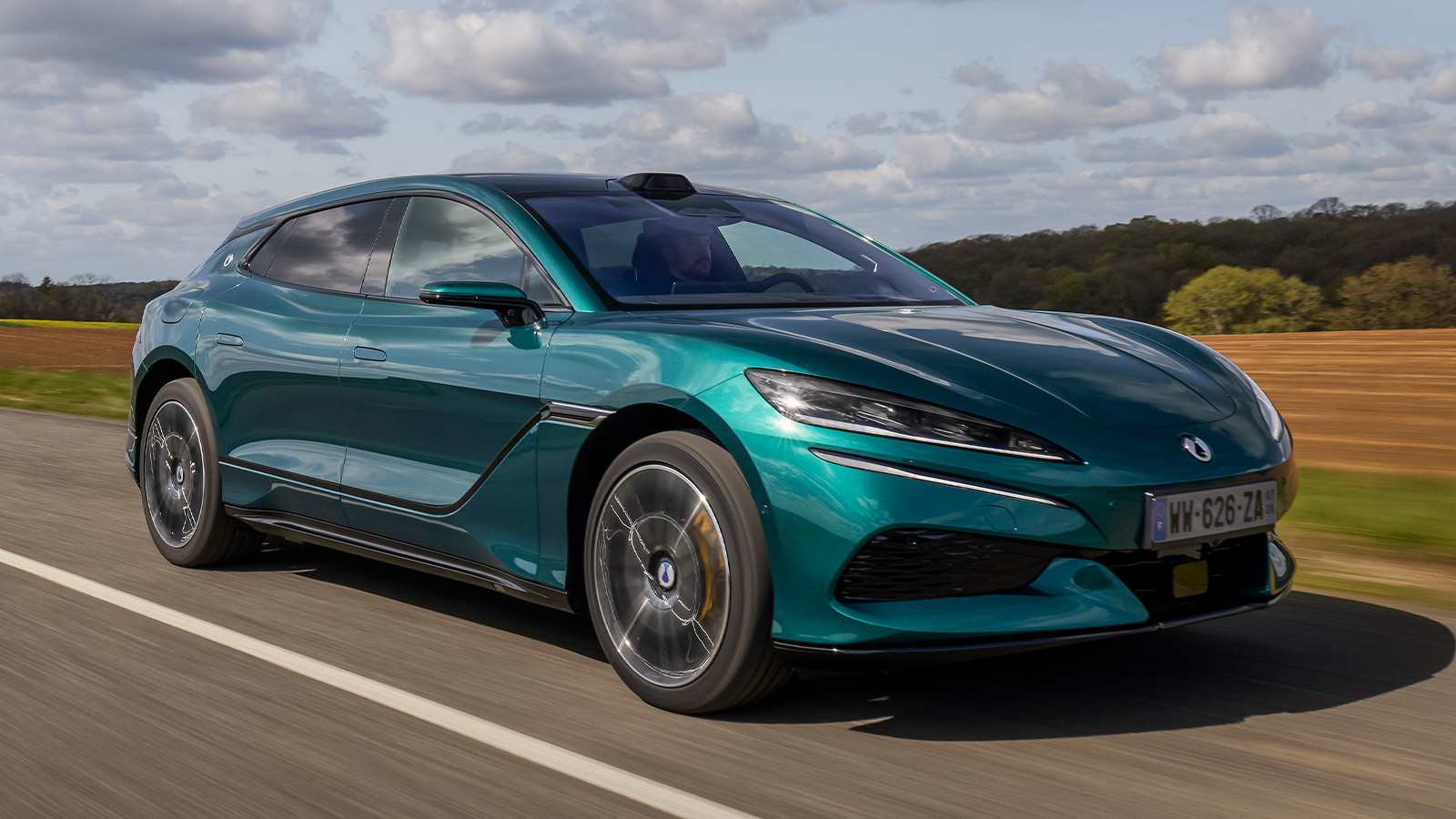
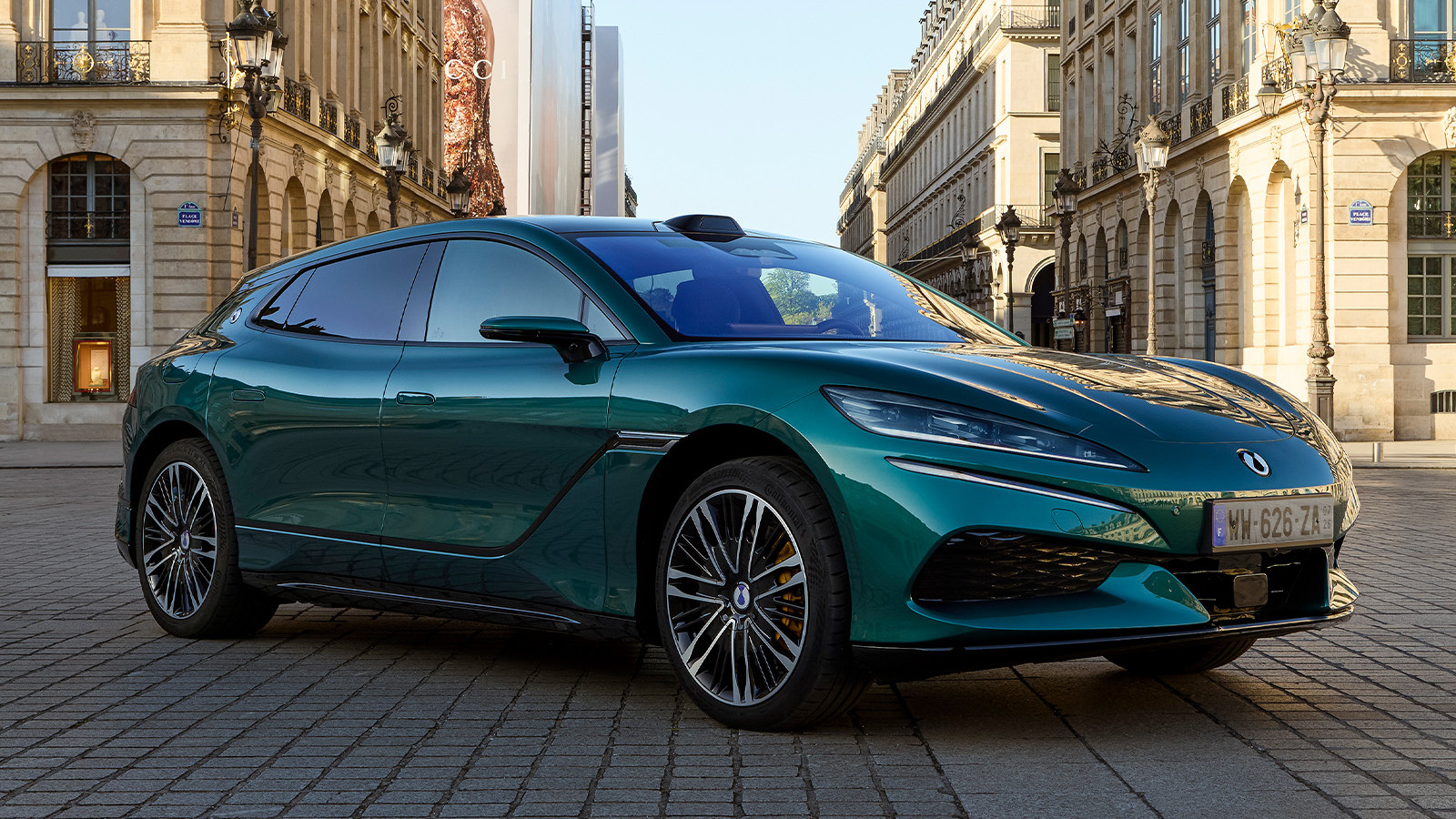
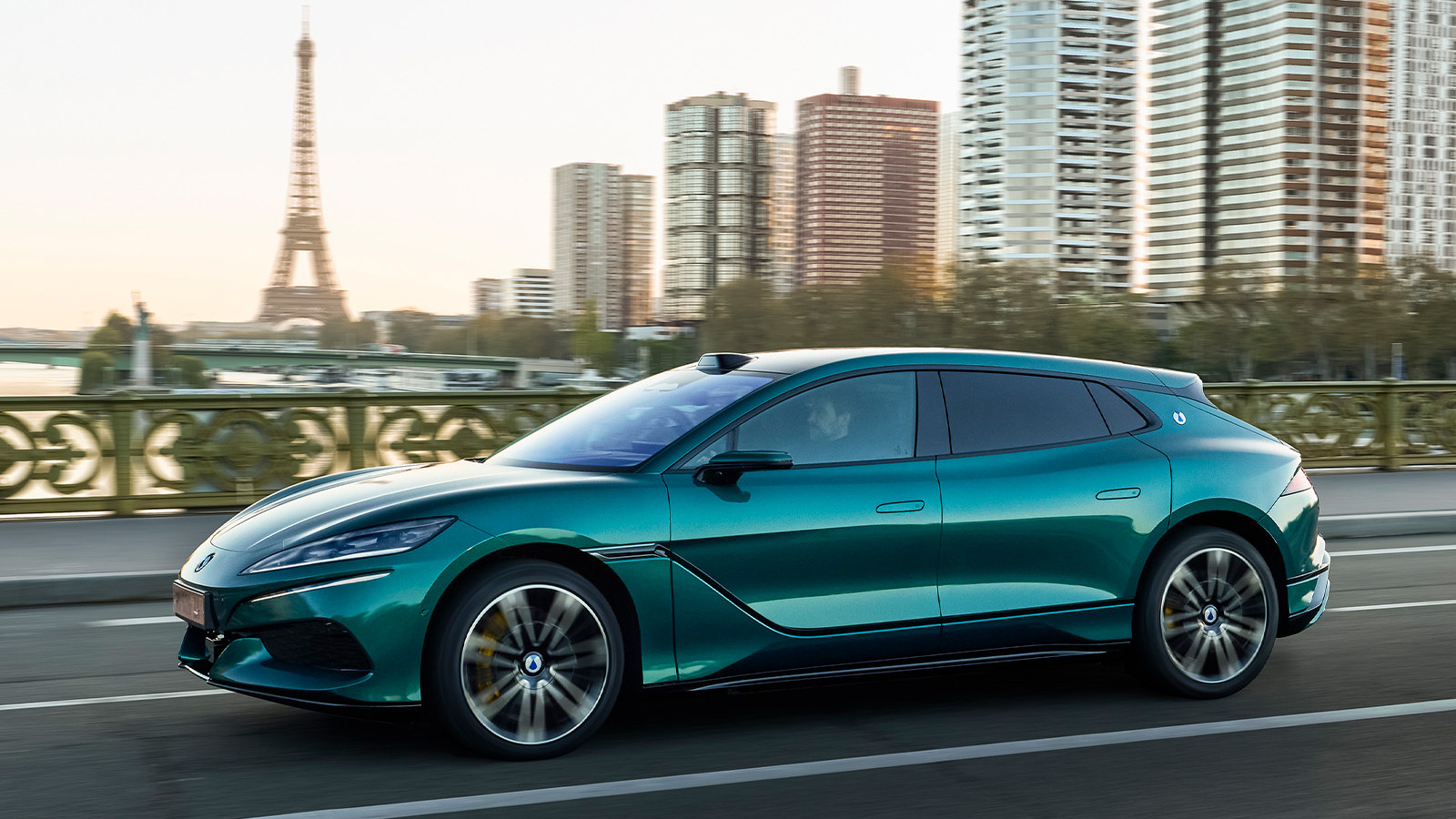
The Denza Z9 GT is not quite like any Chinese car that has gone before it.
You can argue that other Chinese cars aim to beat the competition by offering more: more power, more tech, and more space, all for less money.
However, Denza is offering more for, well, more. Prices are yet to be confirmed, but this EV will cost around £100,000 (€115,000/$125,000) at least.
In France, it will be similar. In Australia - £55,000 to £60,000 (€63,250 - €69,000/$68,750 - $75,000), and in China, about £45,000 (€51,750/$56,250).
The Z9 GT is an electric sports saloon car, targeted directly at the Porsche Taycan. Headline draws include huge amounts of power, crab walking and a nine-minute charge. But does the Chinese firm live up to its on-paper expectations? We’ve driven it, so read on to find out.
The electric Denza Z9 GT (a plug-in hybrid will follow) uses a 309bhp motor on the front axle and twin 416bhp motors on the rear, producing a combined output of 1140bhp.
Those independent rear wheels give it a few party tricks, including "crab walking" and turning the rear wheels in tandem to parallel park for you - simply drive nose-first, and the rear follows you in.
The rear wheel steering is ace in a tight spot - but it makes the steering quite heavy and grainy when you engage it at low speeds - like you need to push past some kind of mechanical barrier.
It has a 598km (372 miles) range, which isn’t bad, but not the best in class. But Denza is hoping its new charging network will make up for that - and it will become its Tesla Supercharger eureka moment. Dare I say, it really needs one, because the car is just good. It is better than fine, but not great.
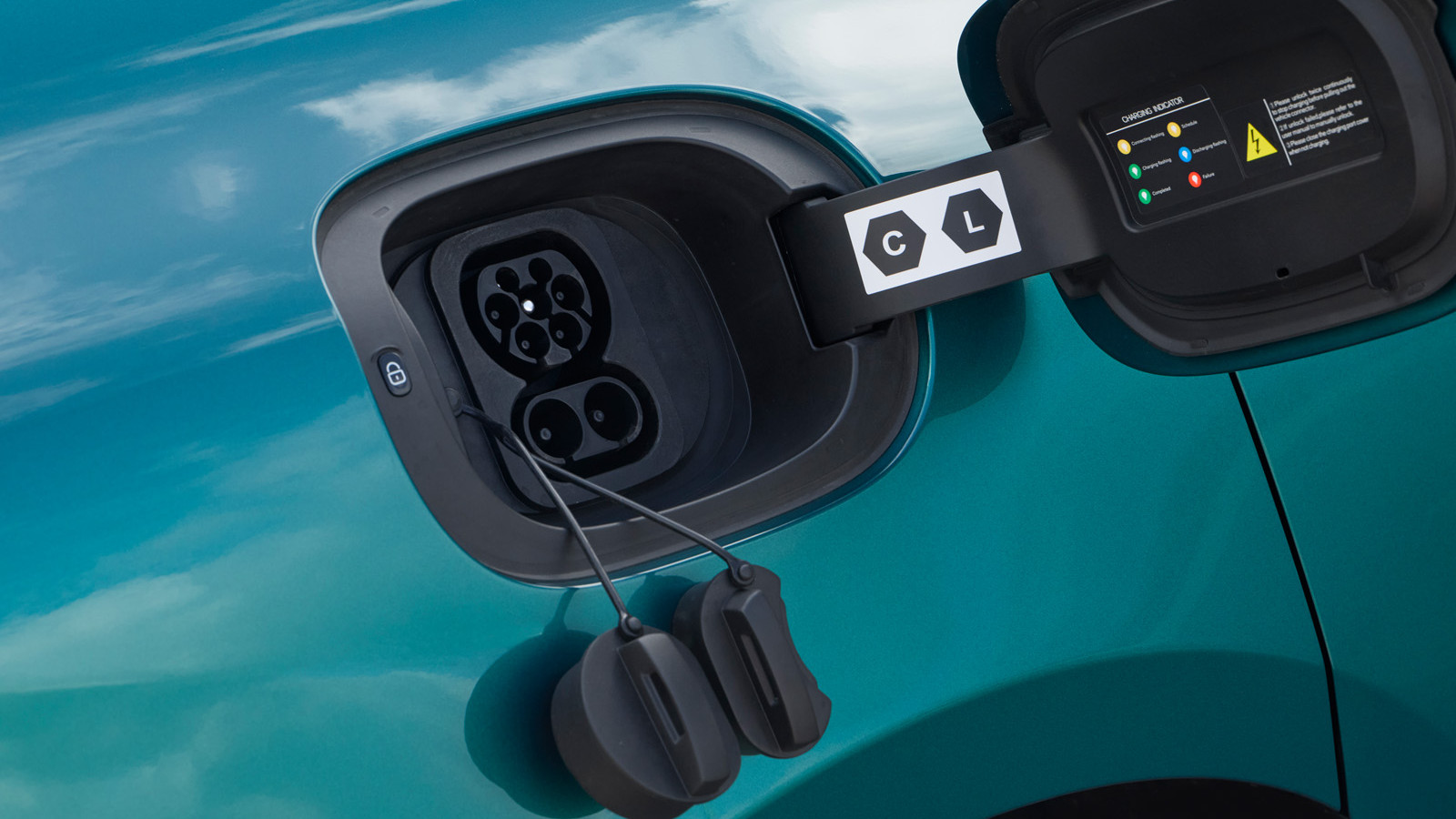
It will be able to accept power at a rapid 1500kW, allowing it to charge from 10 to 97 per cent (stopping short of 100 per cent to extend the life of the battery) in just nine minutes.
I watched it do this in a demonstration, and it is mesmerising. I drive a lot of EVs, and I very rarely need to charge from 10 to 90%. If I am rapid-charging, I am more likely to charge from 10 to 30% - just enough to get me home, where I will plug in because it is much cheaper. With this car, it will take a mere couple of minutes.
There is Lidar on the roof, too, futureproofing the car for autonomous driving. Denza is banking on governments changing legislation to allow for higher levels of autonomy; when they do, unlocking it should merely be a case of a software update.
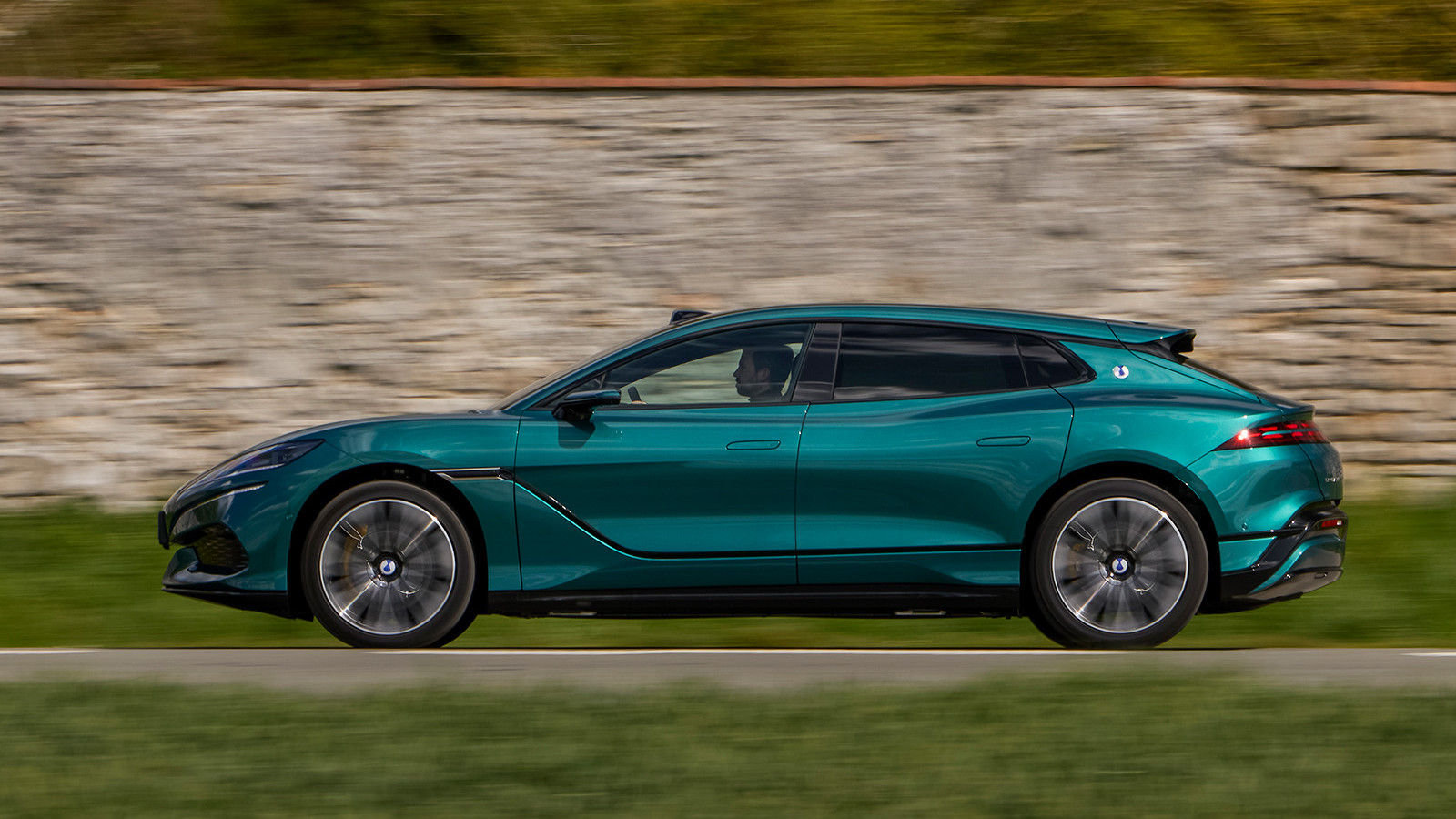
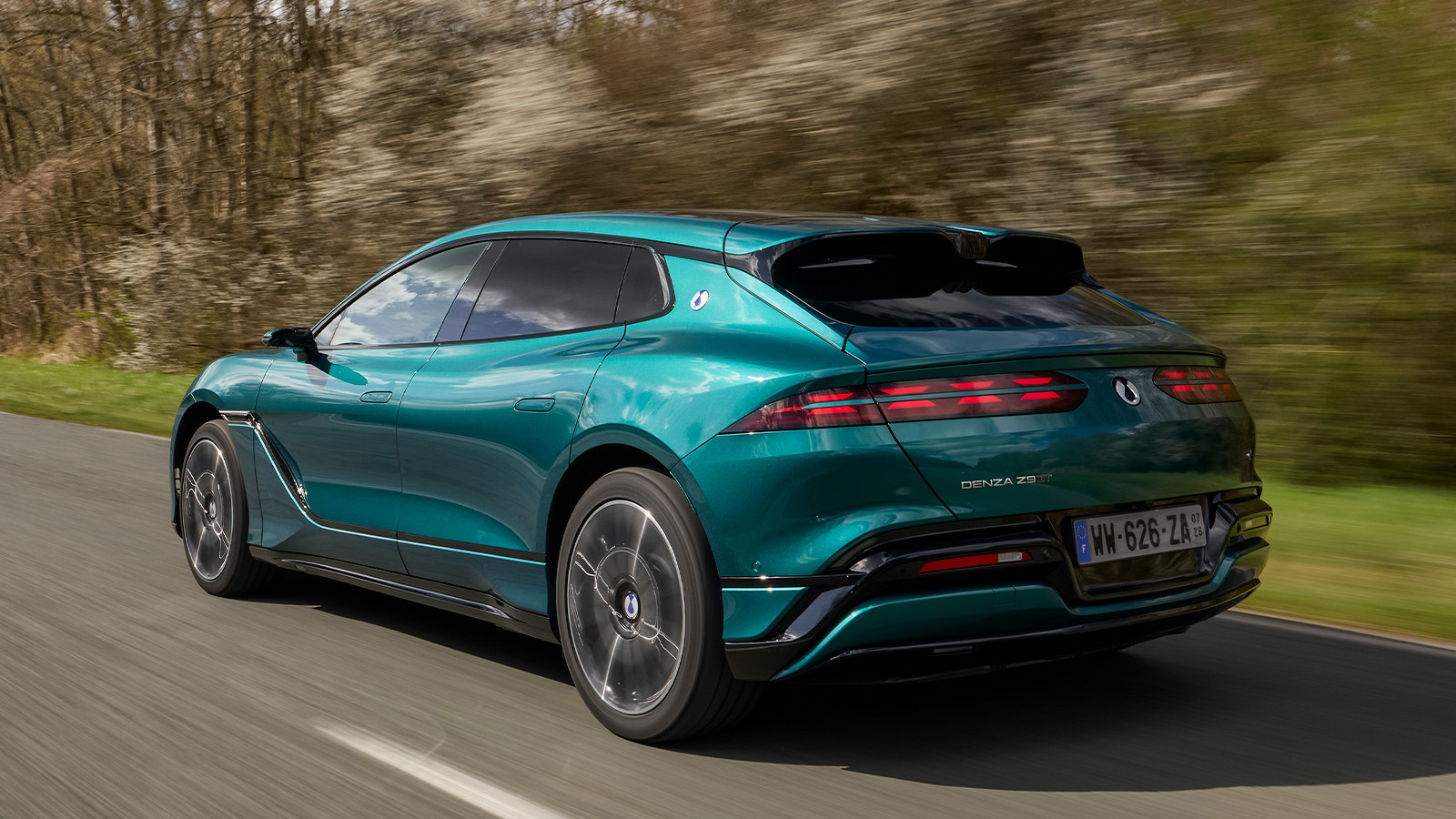
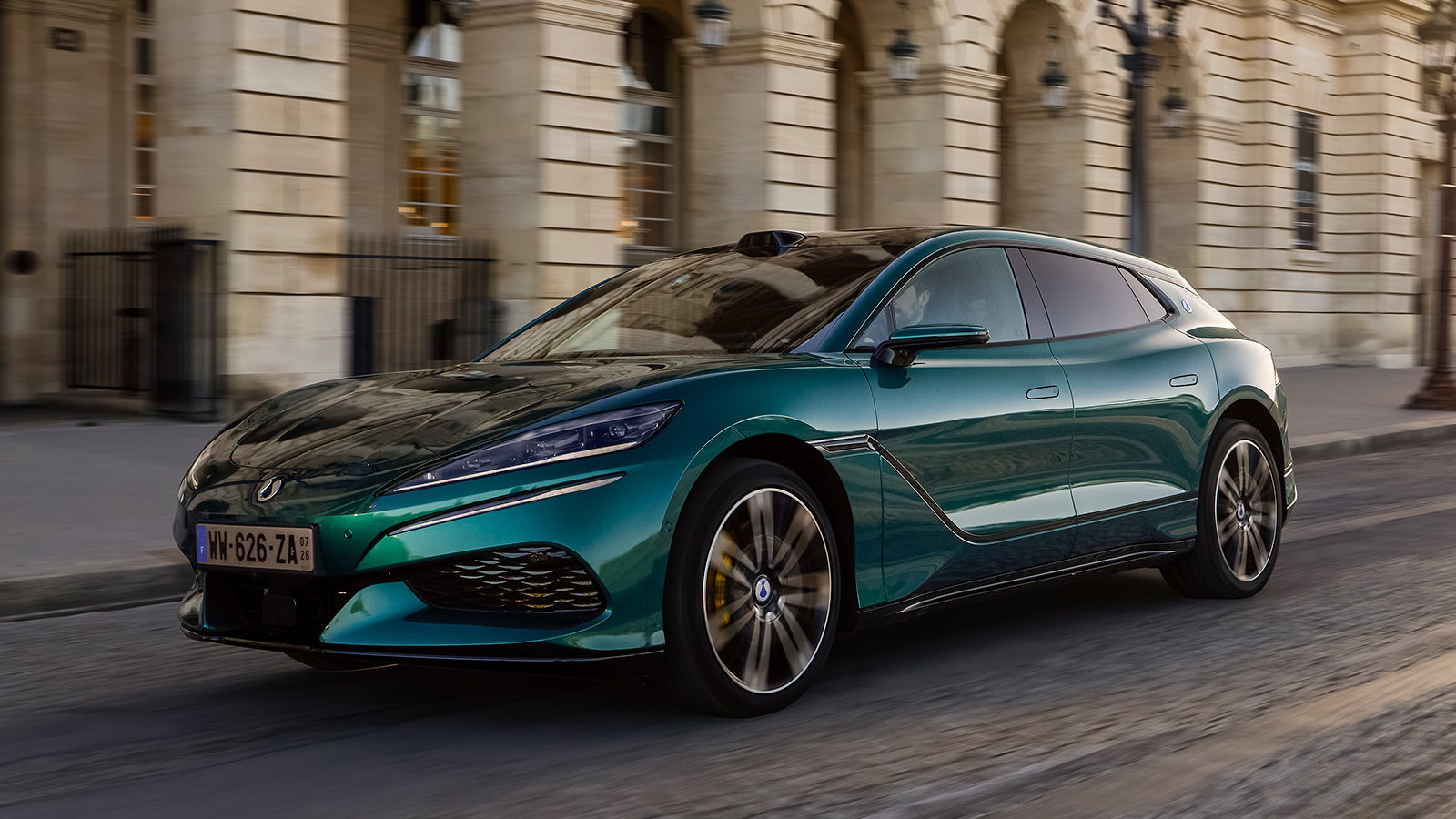
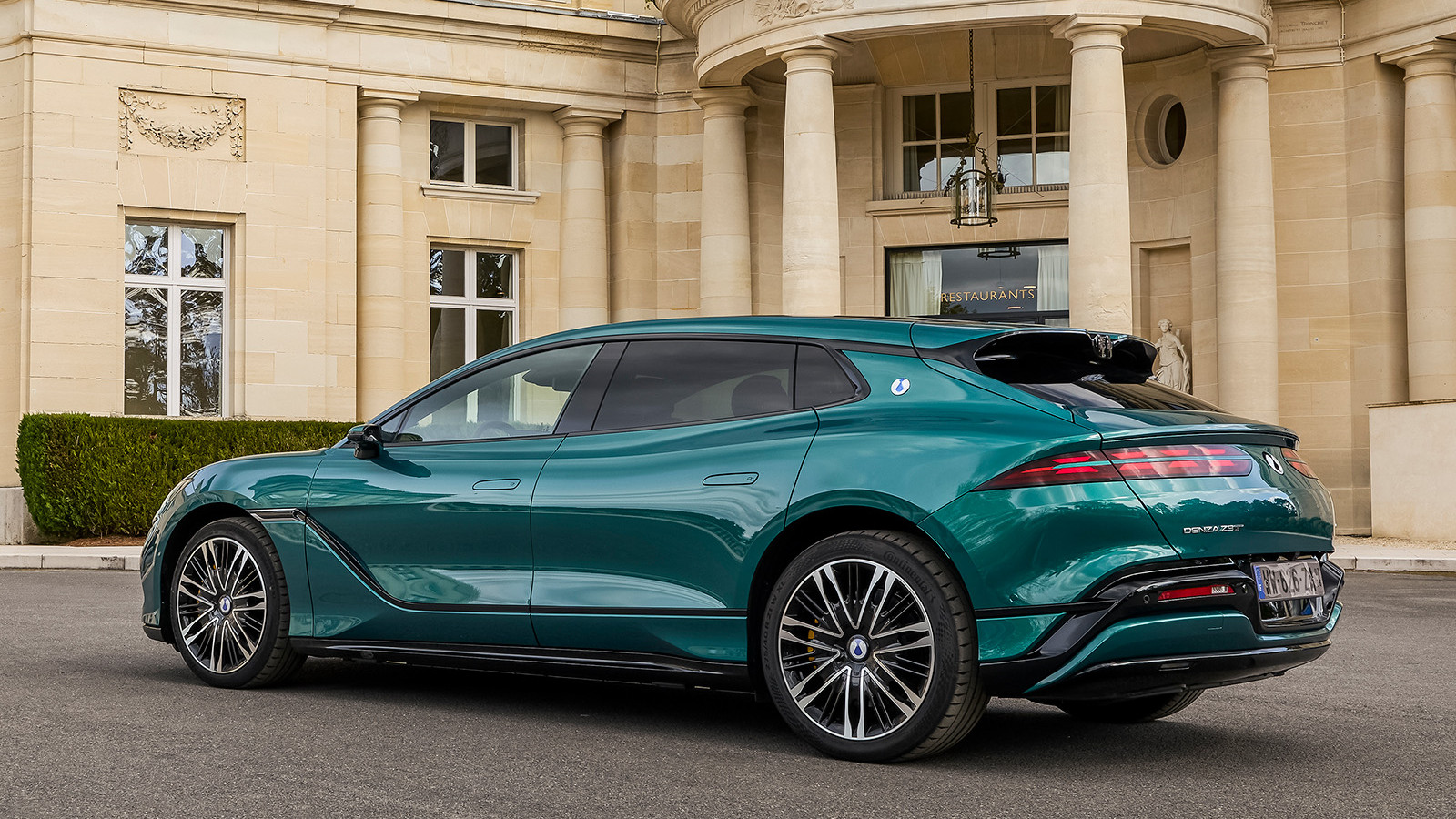
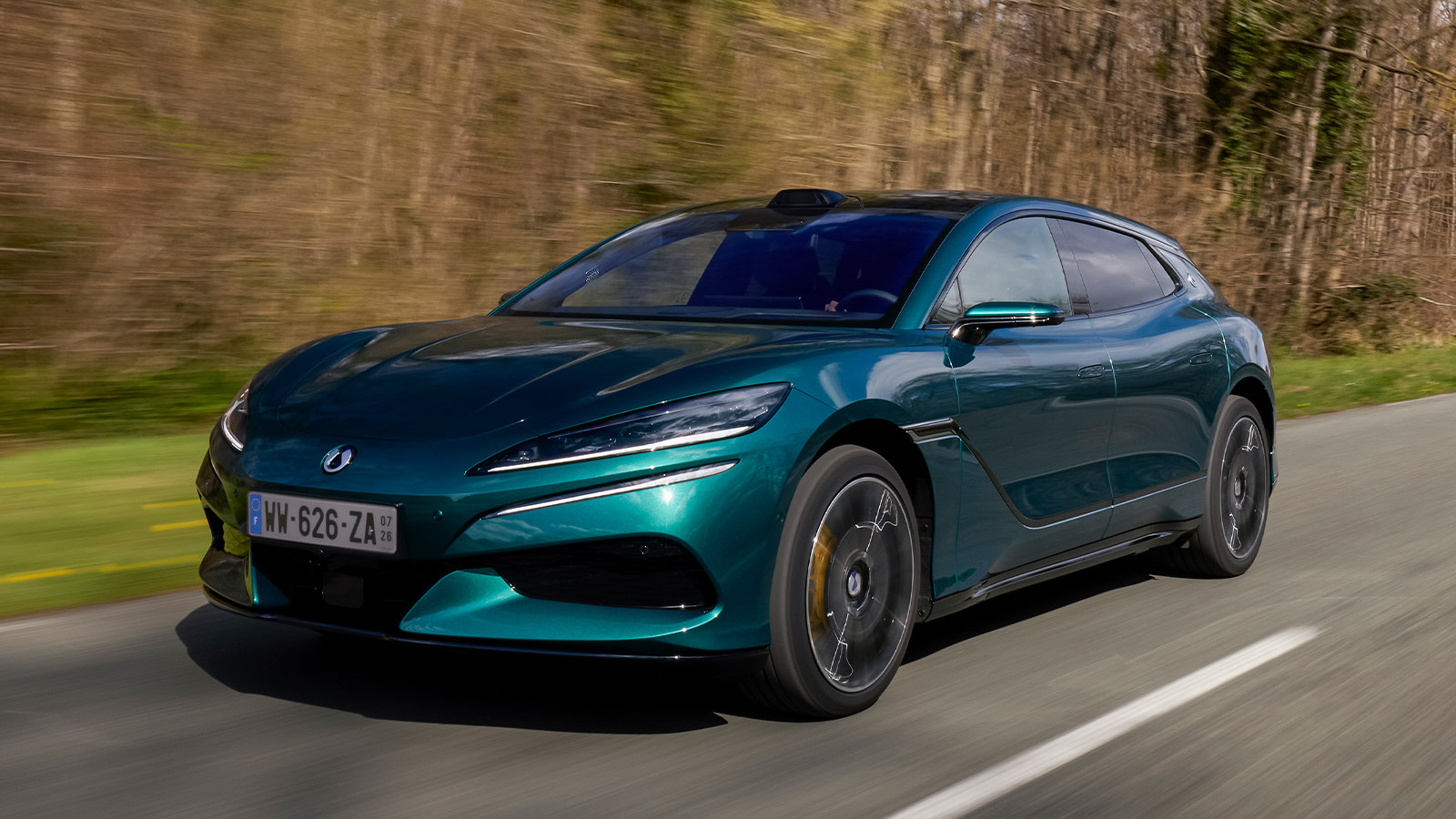
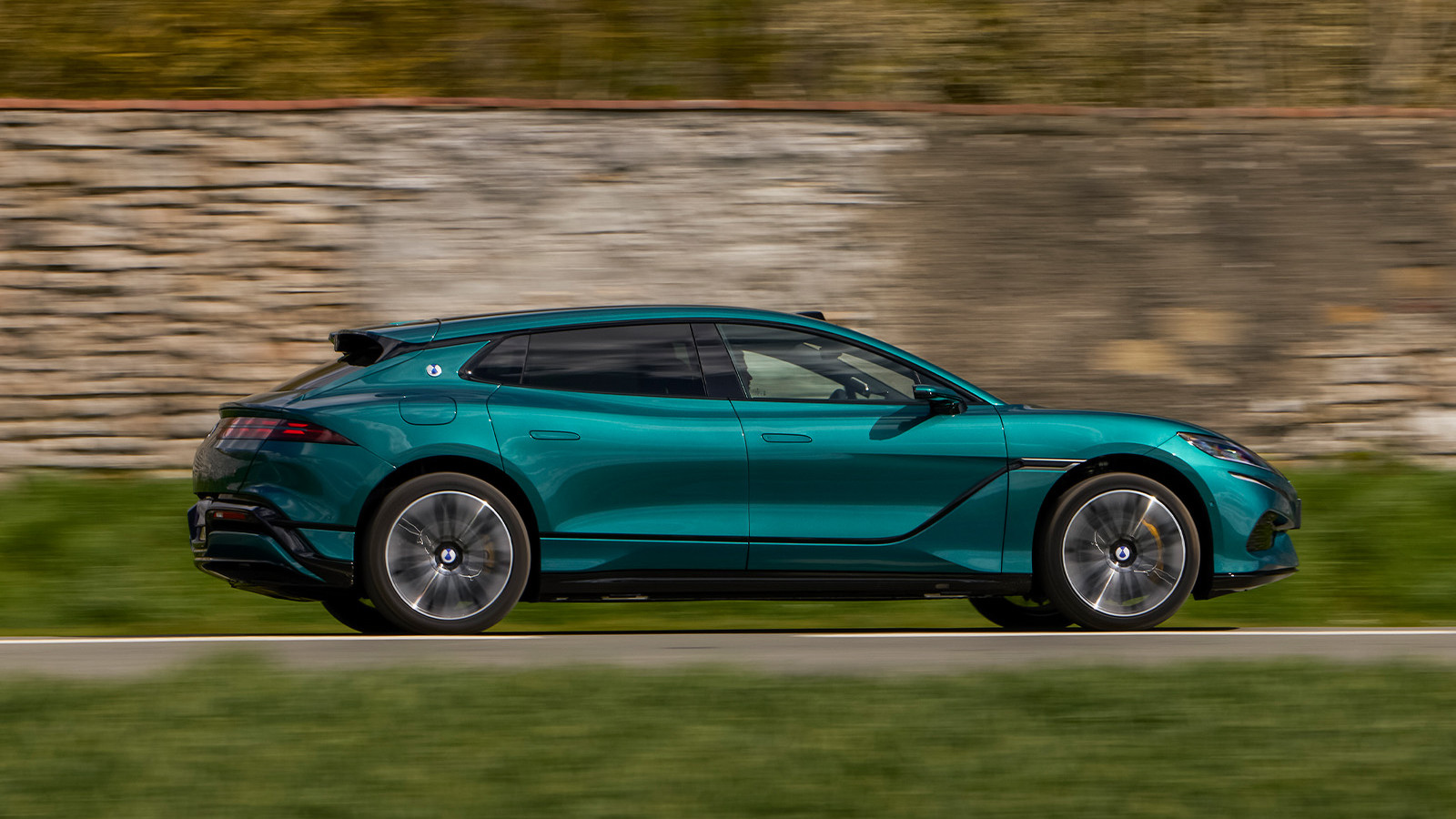
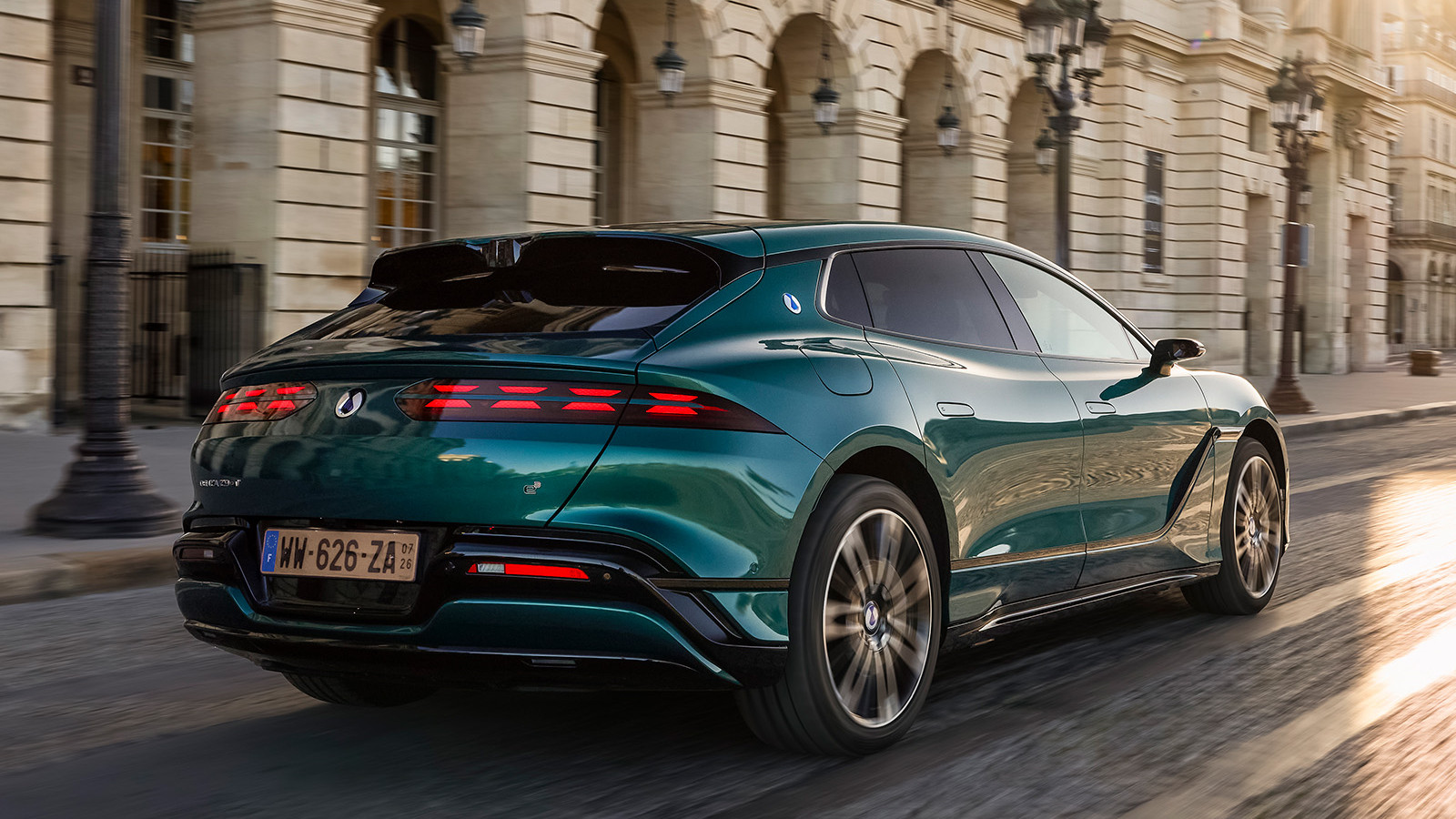
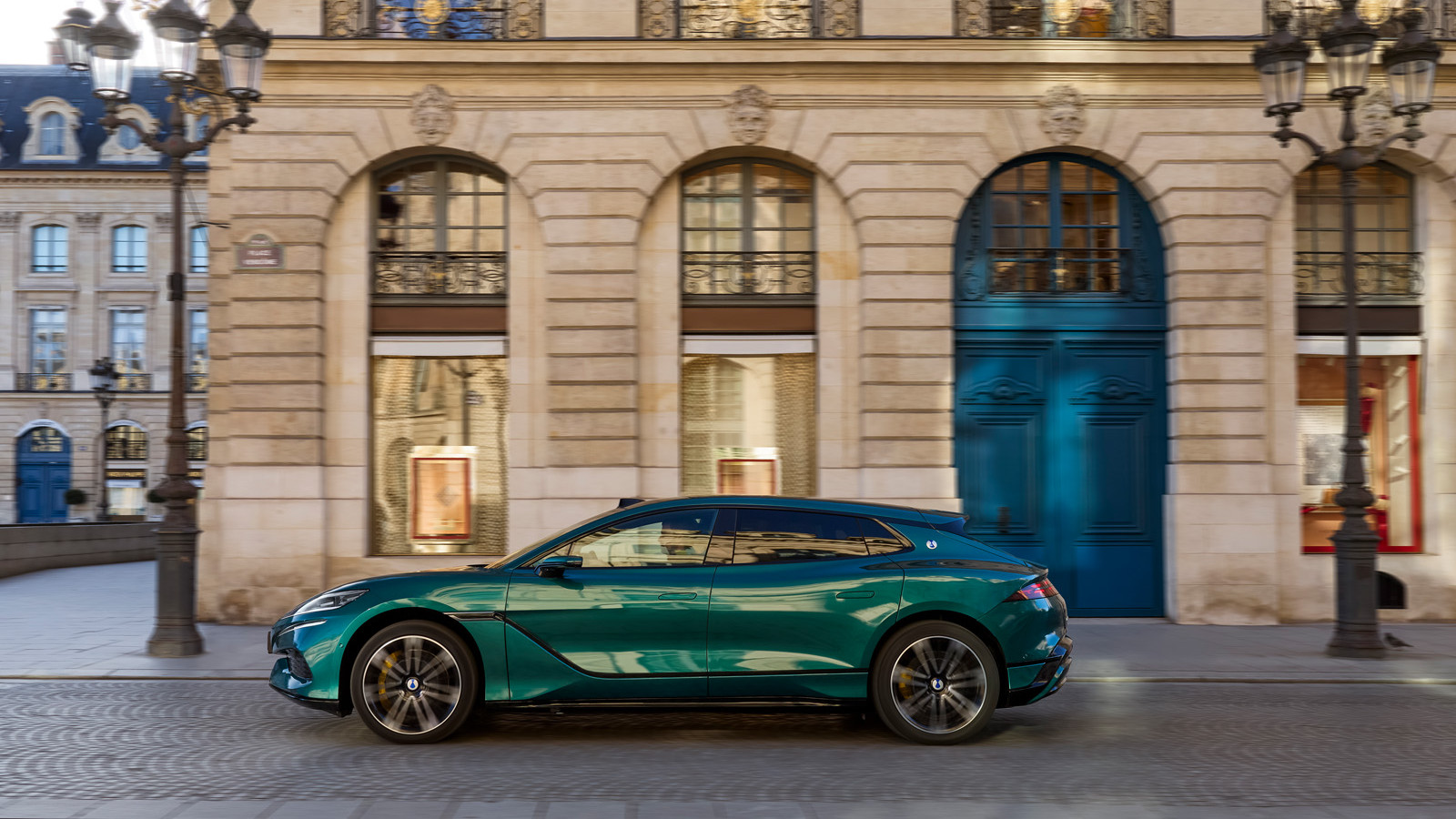
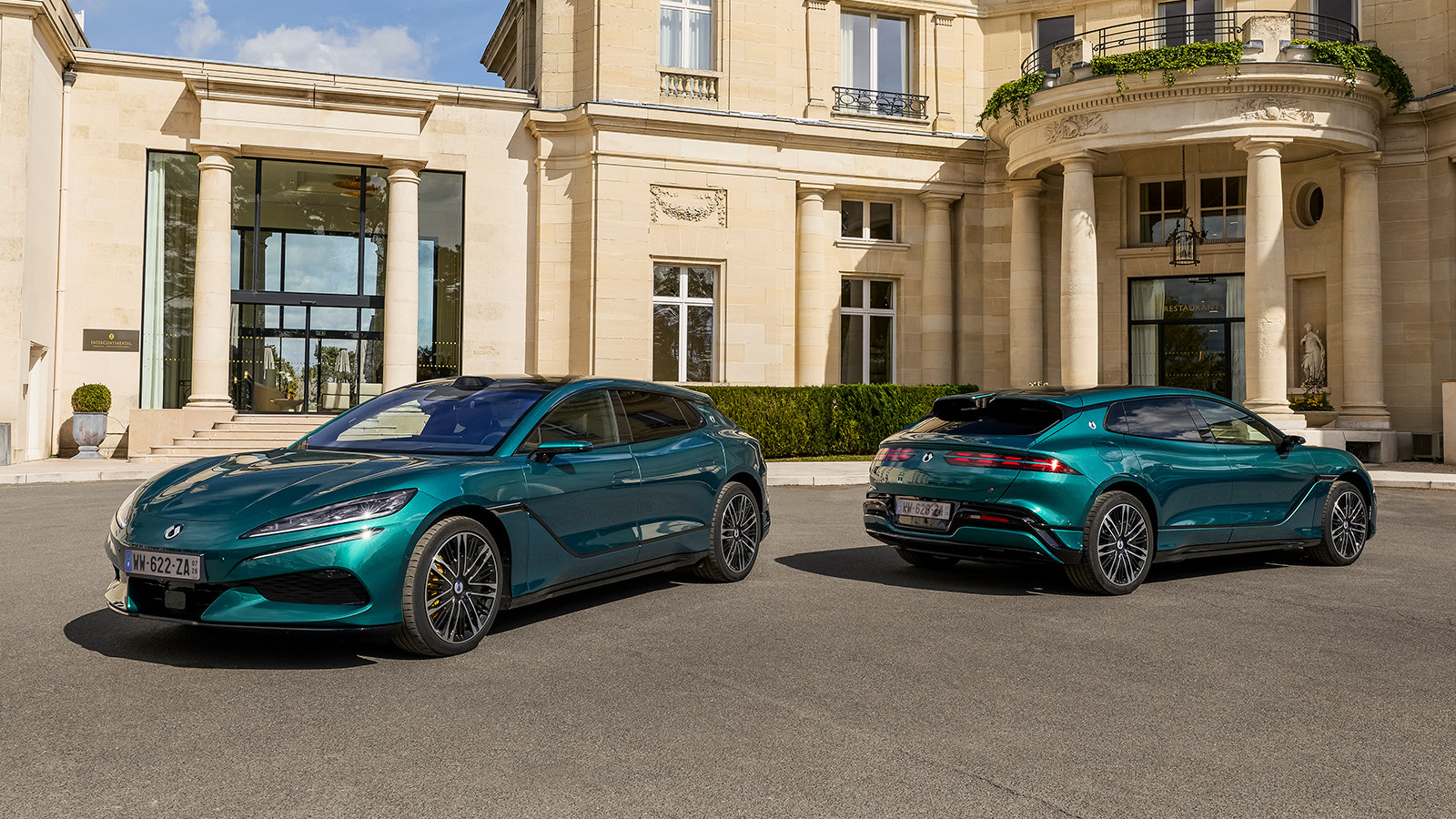
But I’ll get back on the road and tell you about the actual car. It has a curious, estate-like shape. It’s not unhandsome and comes in some lovely, bright colours.
The front is slightly generic, but there are some ornate creases along the sides and a lovely, shooting brake-like rear with large tail-lights that evoke 1960s Americana. It’s not anonymous, but it doesn't stop you in your tracks either.
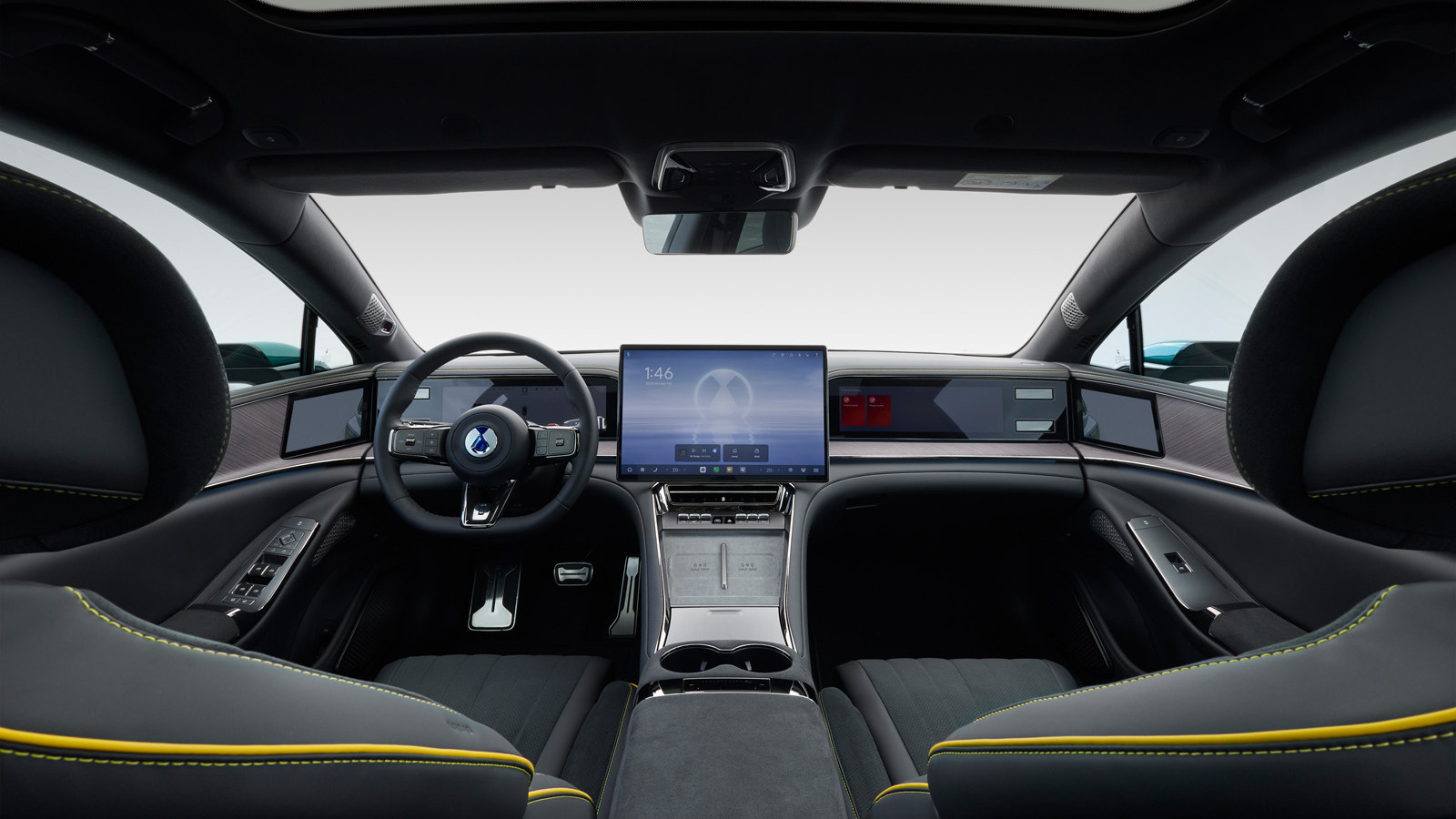
Inside, the quality is largely good. Stella Li, the executive vice-president, made numerous references to not wanting leather in her new Denza showrooms, which should arrive in the UK around July. Yet, this Z9 is full of cowhide. There is even a fetching, purplish colour option that I imagine very few will buy.
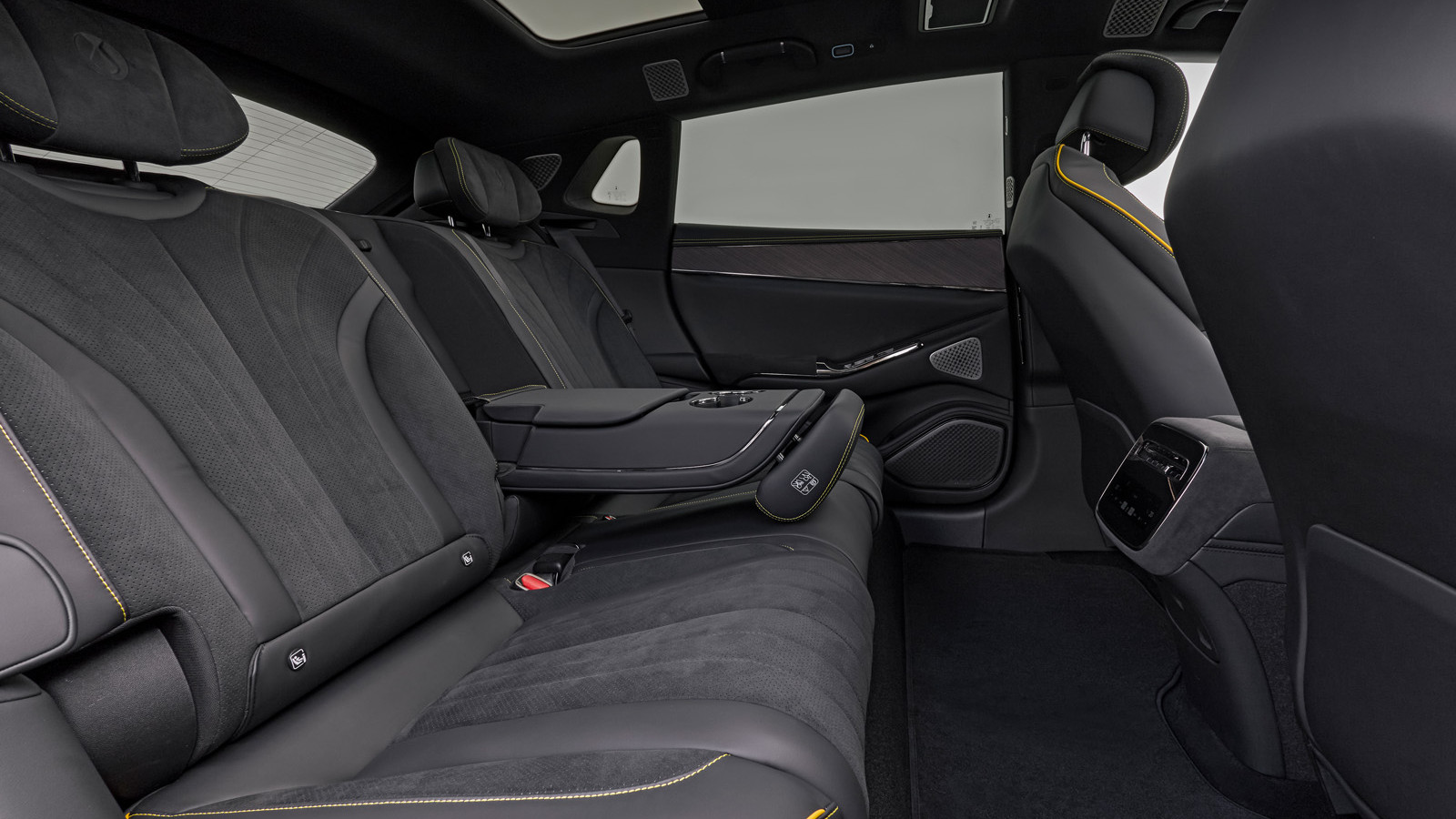
Space for passengers in the rear is top-notch. There are only four seats, but all four get heating, cooling, and massage functions, and the rear two can also recline. The boot is actually on the small and narrow side, but there is a bit of underfloor storage and a "frunk" too.
To drive, it is bloody quick. Pull the paddle behind the steering wheel to activate boost mode, and you can believe that sub-3.0-second 0-100kph (0-62mph time). The pace tails off beyond that, however. While from a standstill it is galvanic, its accelerative ability feels more subdued at every other speed. I think this is because of its weight.
Internet commenters, get your typing finger ready: it weighs 2.9 tonnes. Being this heavy has a profound effect on everything. When it accelerates hard, the nose lifts significantly.
The suspension - more on that later - has an awful lot to do; sometimes it does a great job, and at other times, not so great. Then there are the brakes.
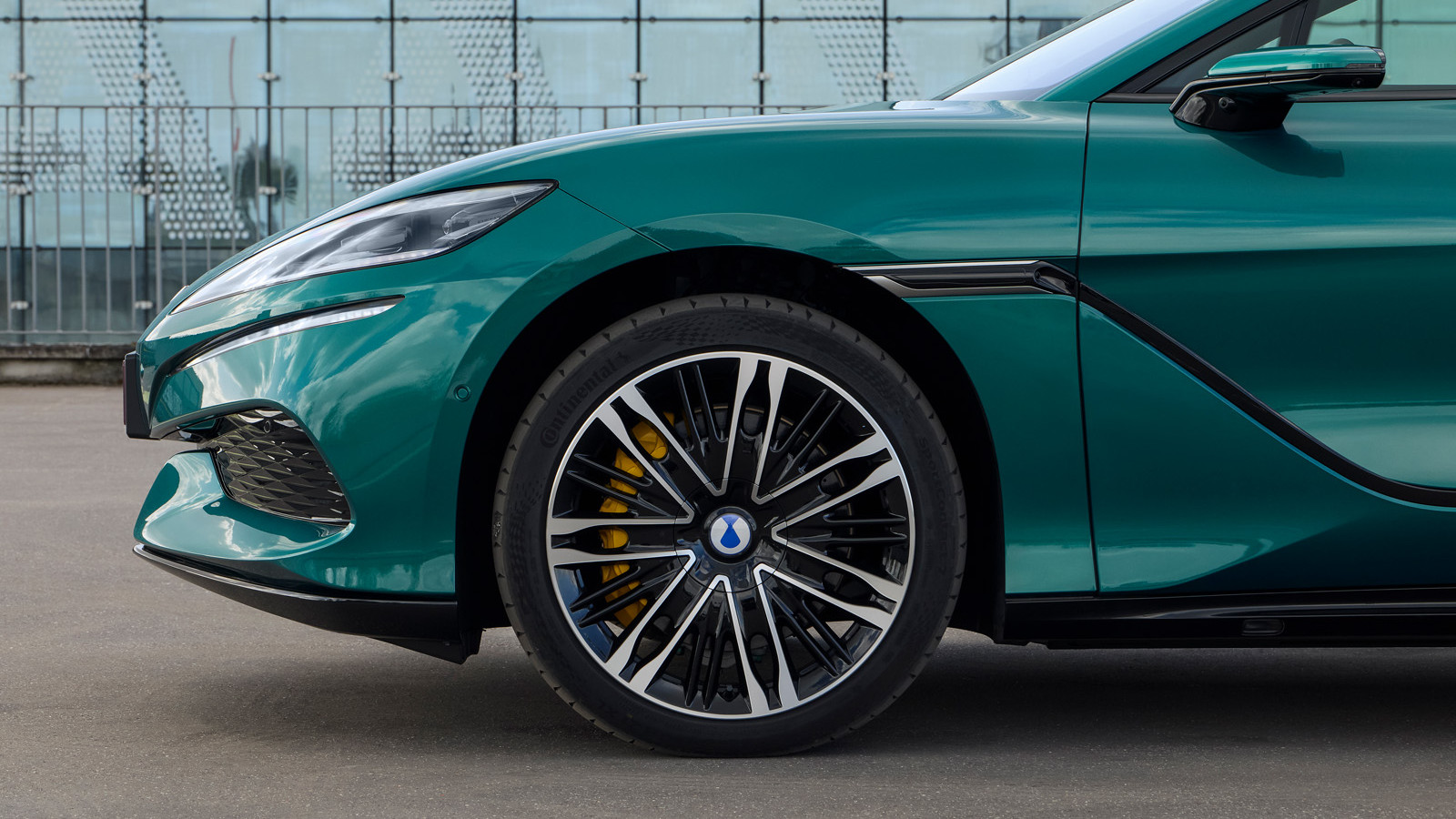
With three tonnes and 1100bhp, you need good ones, and the carbon ceramics are strong. But the pedal has just too much travel before you hit the full anchors. Even after more than an hour of driving, it was still pretty hard to modulate.
Denza reckons it will crack 3.0 miles per kWh, and on my testing, it pretty much did just that. It’s not bad for a car of this size and power, but the Germans are getting much better results, admittedly with less power.
The dual-chamber air suspension has a few different settings, though its firmest is still pretty bloody soft. It could do with a touch more damping for UK tastes.
It has a habit of burying itself deeply into undulations and emerging on the other side quite slowly. At motorway speeds on well-maintained roads, it is really pretty comfortable; you could do serious mileage. But at lower speeds, there’s the jittery pitter-patter of a car that has a lot going on underneath it.
It’s a bit of a feeler, this car. It has 1100bhp - but does it feel that quick? It has the empirical hallmarks of luxury, but does it feel premium? It costs £100,000, but does it feel like a £100,000 car? I don’t think so.
Some oddities prevent the Z9 GT from feeling like a Porsche rival. The doors are electrically operated and the aperture it opens up is sometimes inconsistent.
There are some very uncertain bits if you look (like the vanity mirror cover held up by a magnet) and the touchscreen, while useful, uses pretty standard Android fonts and has a few erroneous capital letters.
There’s even a file manager - a bit like when the McDonald’s ordering screens aren’t working and it defaults to its operating system. It's £50,000 elsewhere in the world. And apart from the crazy power, it feels like a £50,000 car.