
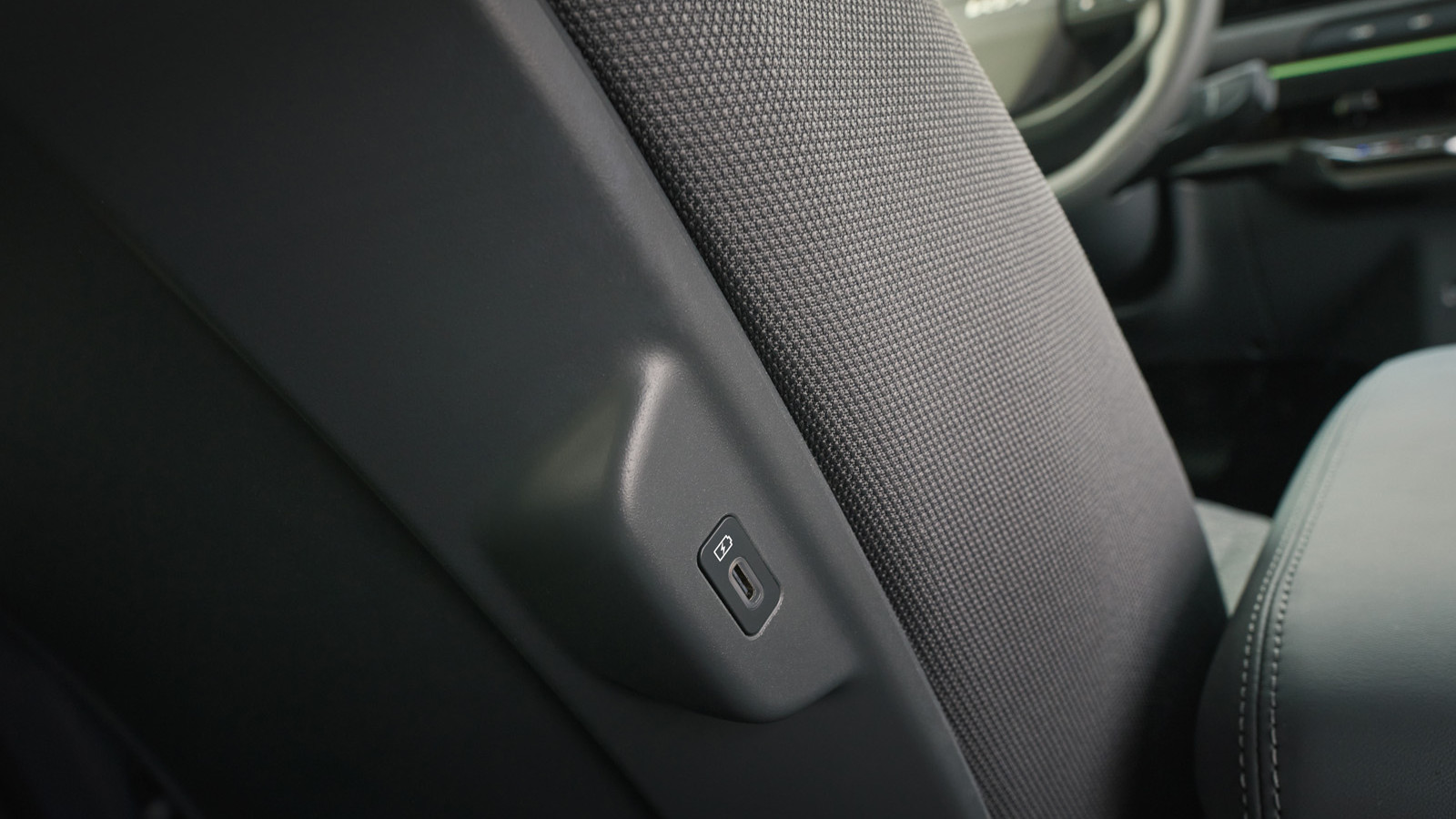
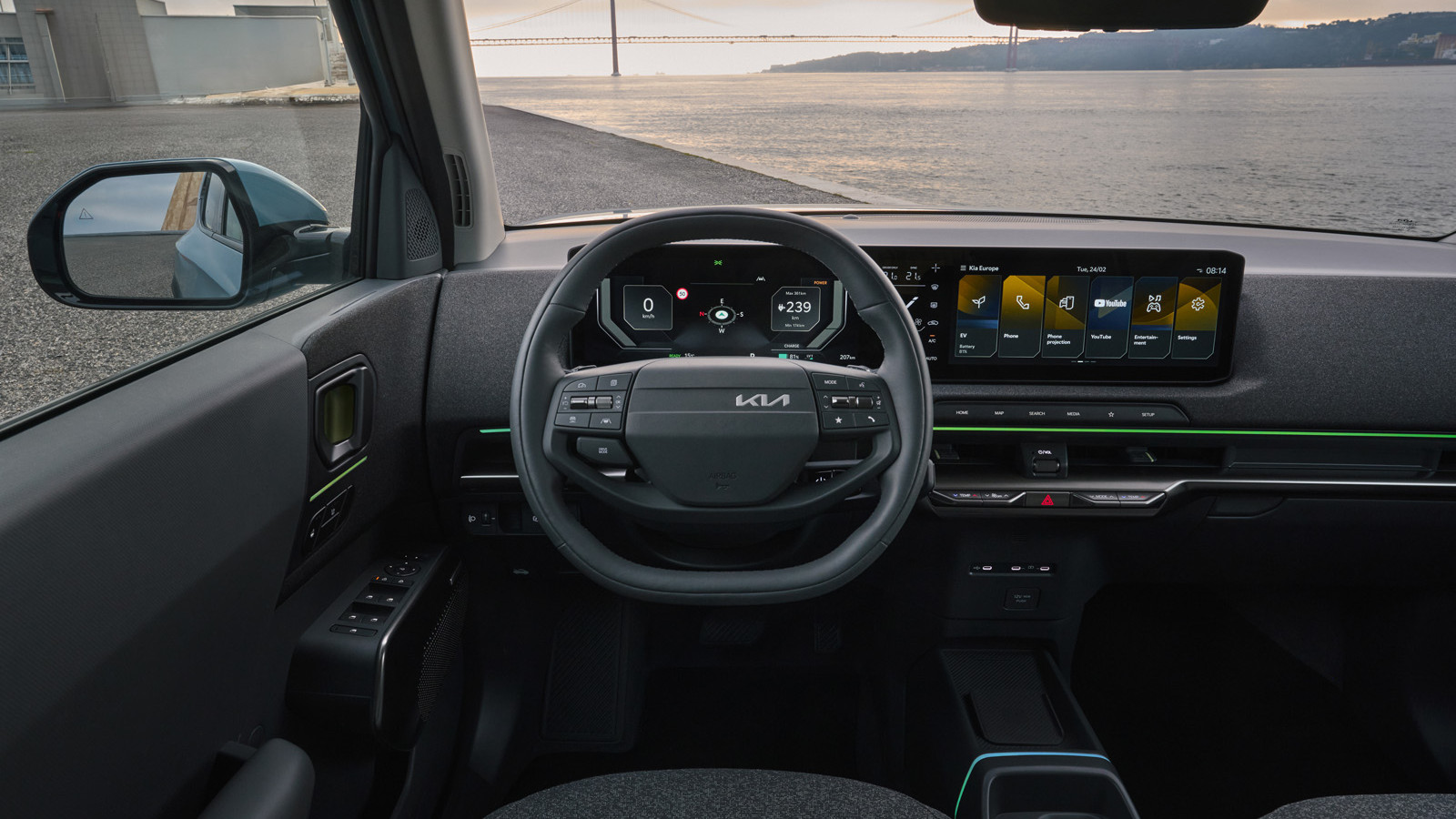
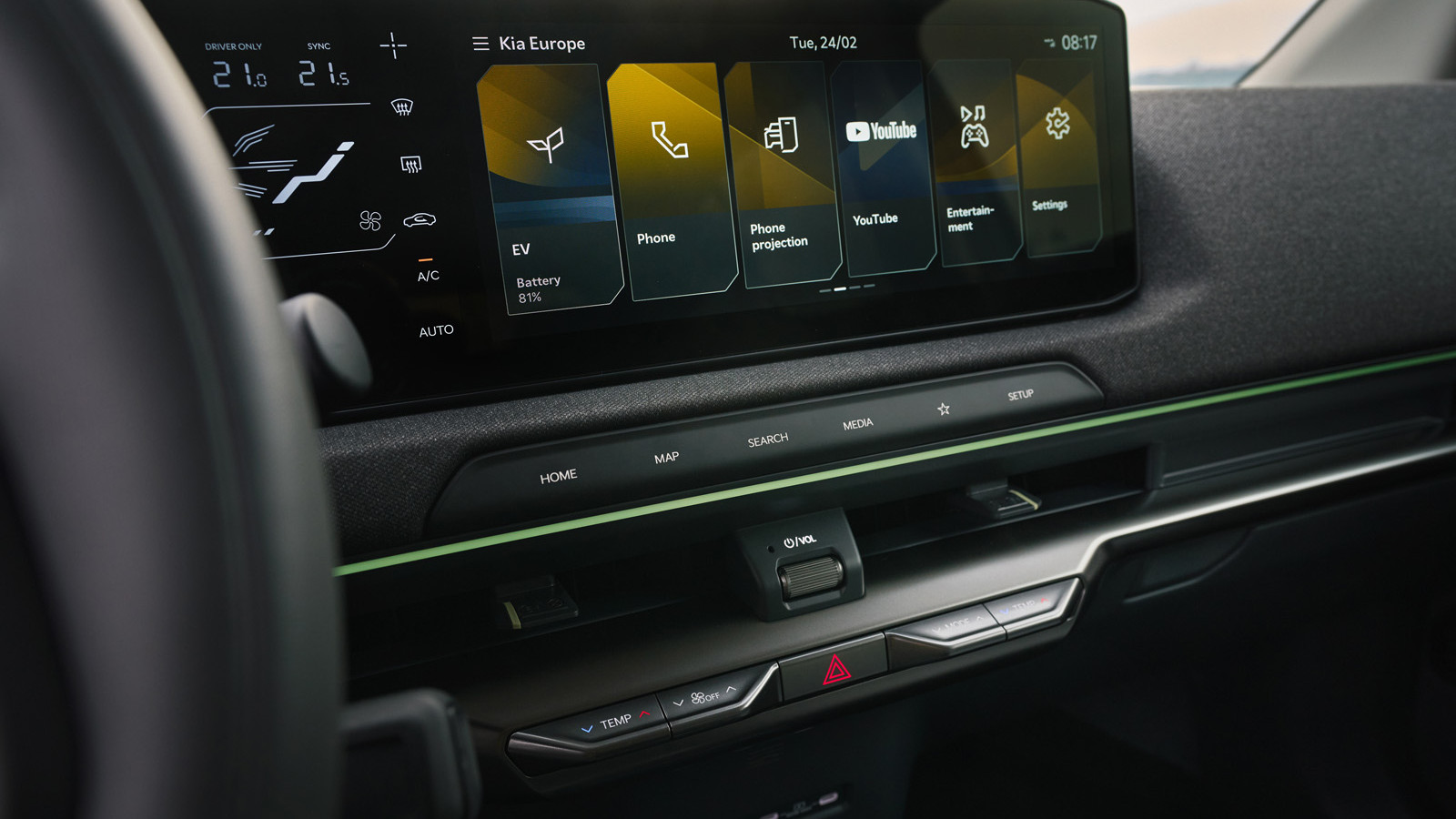
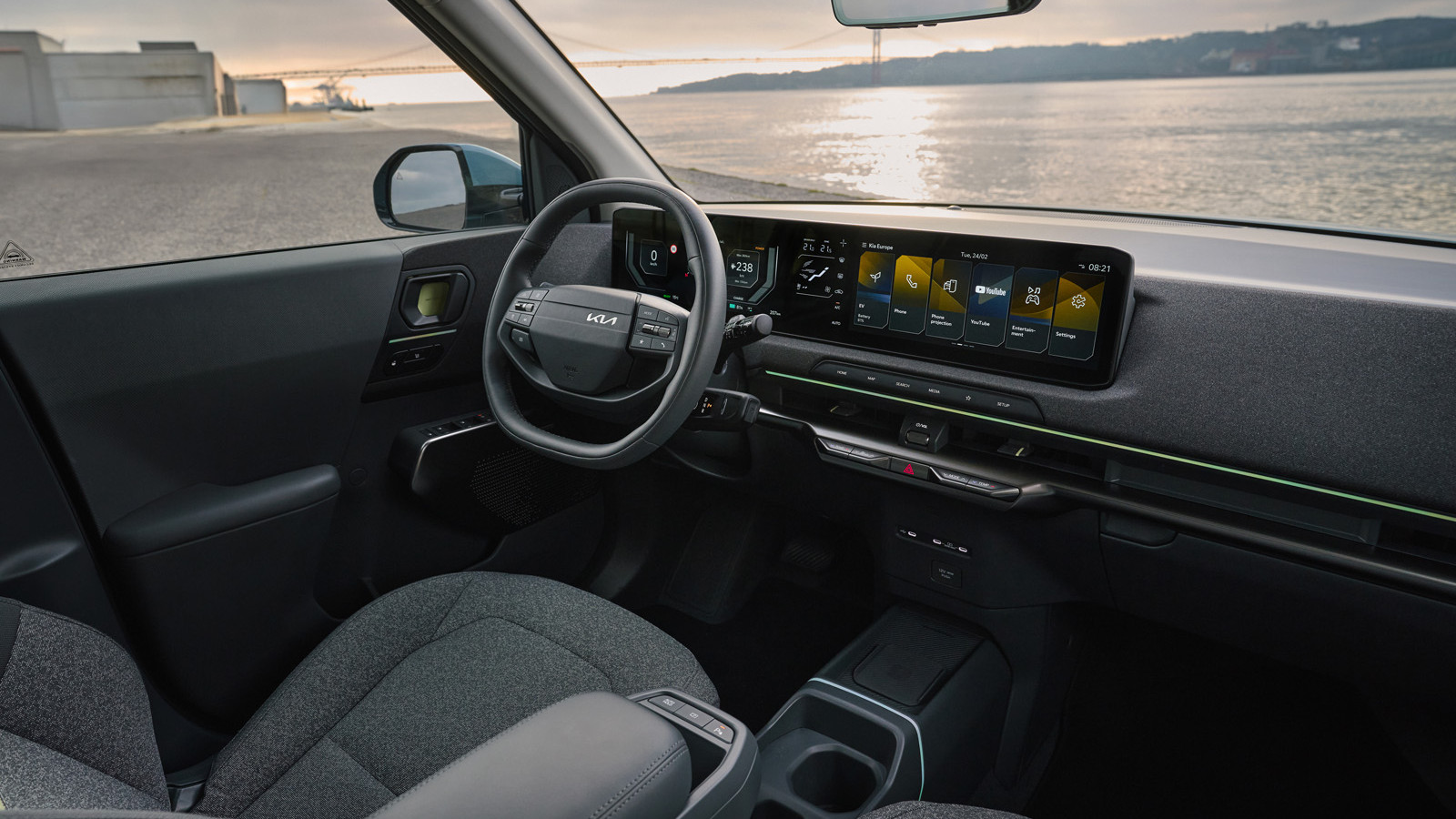
The EV2 may go heavy on hard plastics, but they’re smooth, while softer materials cover key touchpoints, like the armrests. The fabric across the dashboard adds a layer of premium feel and overall perceived quality matches Kia’s £25k target price.
There could hardly be a more competitive battleground for Kia to enter than the electric B-segment, but the Korean brand has developed what appears to be a very well-rounded and complete product that brings a class-leading range, clever packaging, and excellent usability.
Indeed, it is not without fault: the ride and steering could be a little more refined, and more knee room in the back wouldn't go amiss.
But then this is a car that should, in theory, help to democratise the electric car with an entry-level price that is not too dissimilar to a modern supermini or hatchback.
Sure, it faces stiff competition from the likes of Renault, VW and Skoda, but there’s a lot to like about the EV2. Bring on the group test.
My test route encompassed a mixture of urban, rural and motorway driving, from which the EV2 returned an impressive average efficiency figure of 4.0mpkWh. That’s only marginally short of Kia’s claimed 4.1mpkWh.
Like the EV3, the EV2 employs a fairly soft suspension tune that makes it adept at ironing out expansion joints and potholes. Consistent imperfections are dealt with less convincingly, but it’s generally pliant and comfortable. Over sharp undulations and more pronounced lumps and bumps, the soft damping can struggle to keep vertical body movements in check, but on smoother roads at higher speeds, it’s more settled, with the maturity of a larger SUV.
The EV2 felt at home in bustling Lisbon, its compact proportions allowing me to comfortably navigate the narrow streets. The steering feels a bit remote and lacking in communication, and nor does it weigh up as you put more load through the chassis. However, it remains precise and accurate, there’s more than enough grip and the body remains in check: even on twistier mountain roads, it didn’t roll excessively.
Kia put significant development resources into reducing wind and road roar, as well as noise from the powertrain, hence every EV2 is fitted with an acoustic shield under the frunk and motor, while higher-spec cars gain thicker glass and acoustic tyres. So even our Standard Range test car remained hushed and refined at a cruise, with minimal road noise and only a hint of wind whistle.
The regenerative braking system is smooth, controlled and easy to adjust via paddles behind the steering wheel. There are several modes to choose from, including i-Pedal, which enables you to rely solely on the regenerative brakes to slow the car down to a stop.
Our Standard Range test car never left me wanting for more performance, providing a good balance of linearity and responsiveness. Sure, it's not particularly quick but more than brisk enough for overtaking and exploiting gaps in traffic.
The Standard Range produces 145bhp and 184lb ft of torque for a 0-62mph time of 8.7 seconds, while the Long Range has a lower output of around 134bhp to maximise efficiency.
Kia went on the assault last year by launching not one but three new electric cars.
Its latest, the Kia EV2, pivots towards the burgeoning urban EV market with the brand’s smallest battery-powered§ model yet.
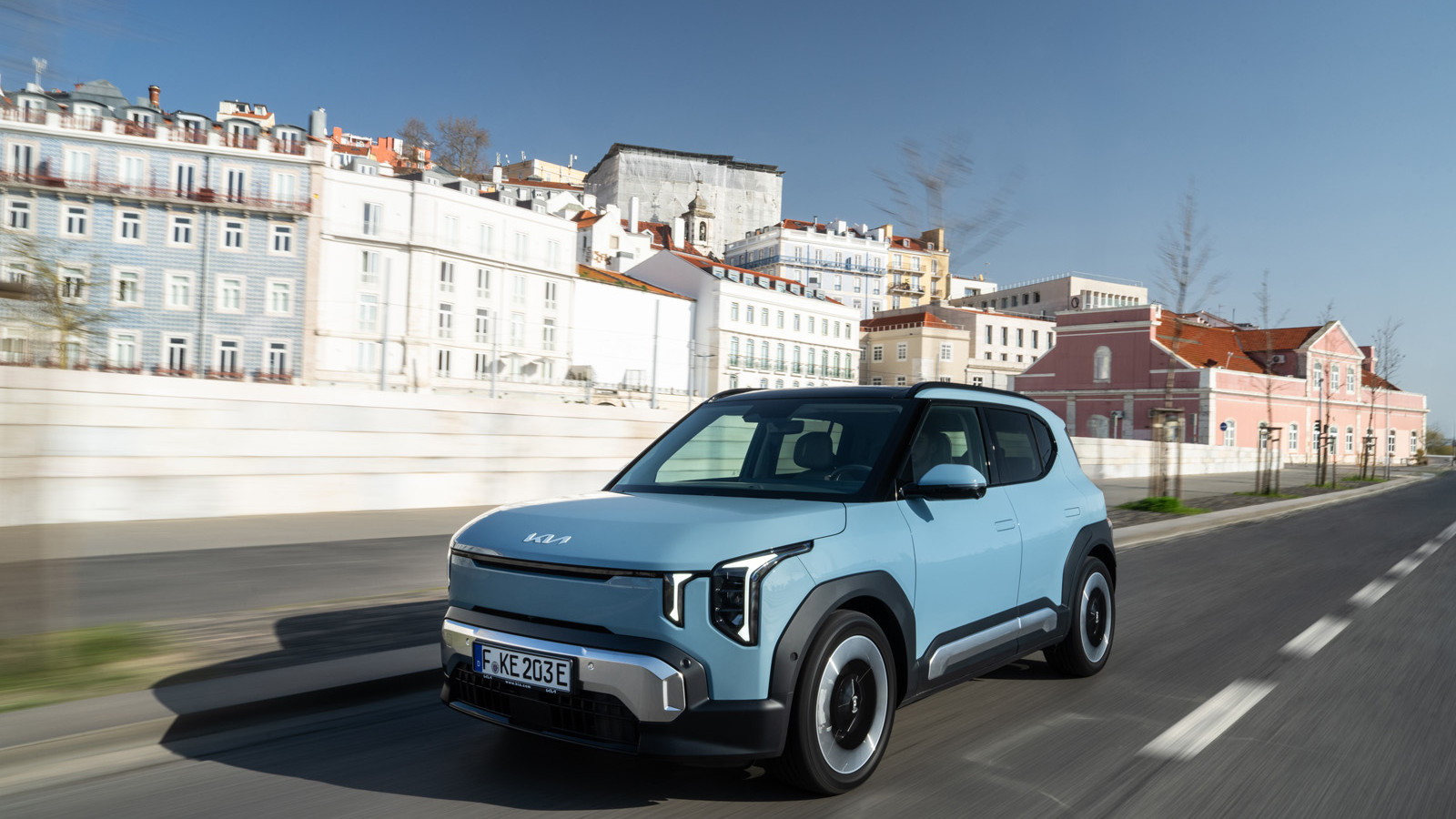
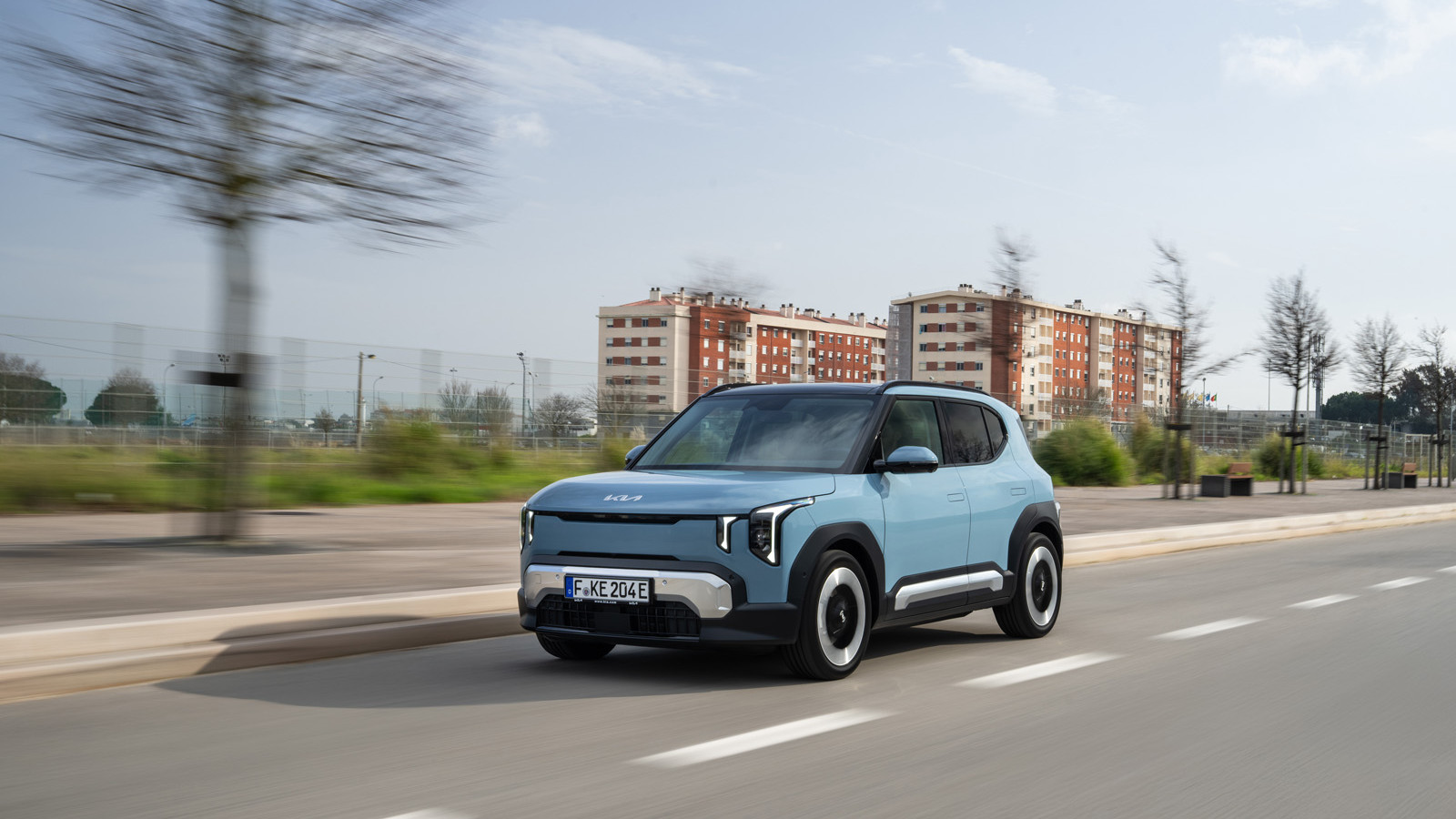
Aimed squarely at the incoming Skoda Epiq and Volkswagen ID Cross siblings, this 4.0m-long crossover is expected to match its European rivals on price, coming in at around €29,000 (£25,000/$31,000), rising to around €35,000 (£30,000/$37,000) for the Long Range version, which is tipped to be the volume seller.
But can a competitive target price, long range and funky styling be enough to fend off its newfound rivals in the ever-growing, ultra-competitive B-segment EV class? Let’s find out.
The dashboard layout is familiar from the rest of Kia’s EV line-up, featuring 12.3in displays for the digital gauge cluster and infotainment on either side of a 5.3in climate-control touchscreen. There’s a handy selection of haptic shortcuts below the main touchscreen for all the functions that matter and physical switches for adjusting the temperature.
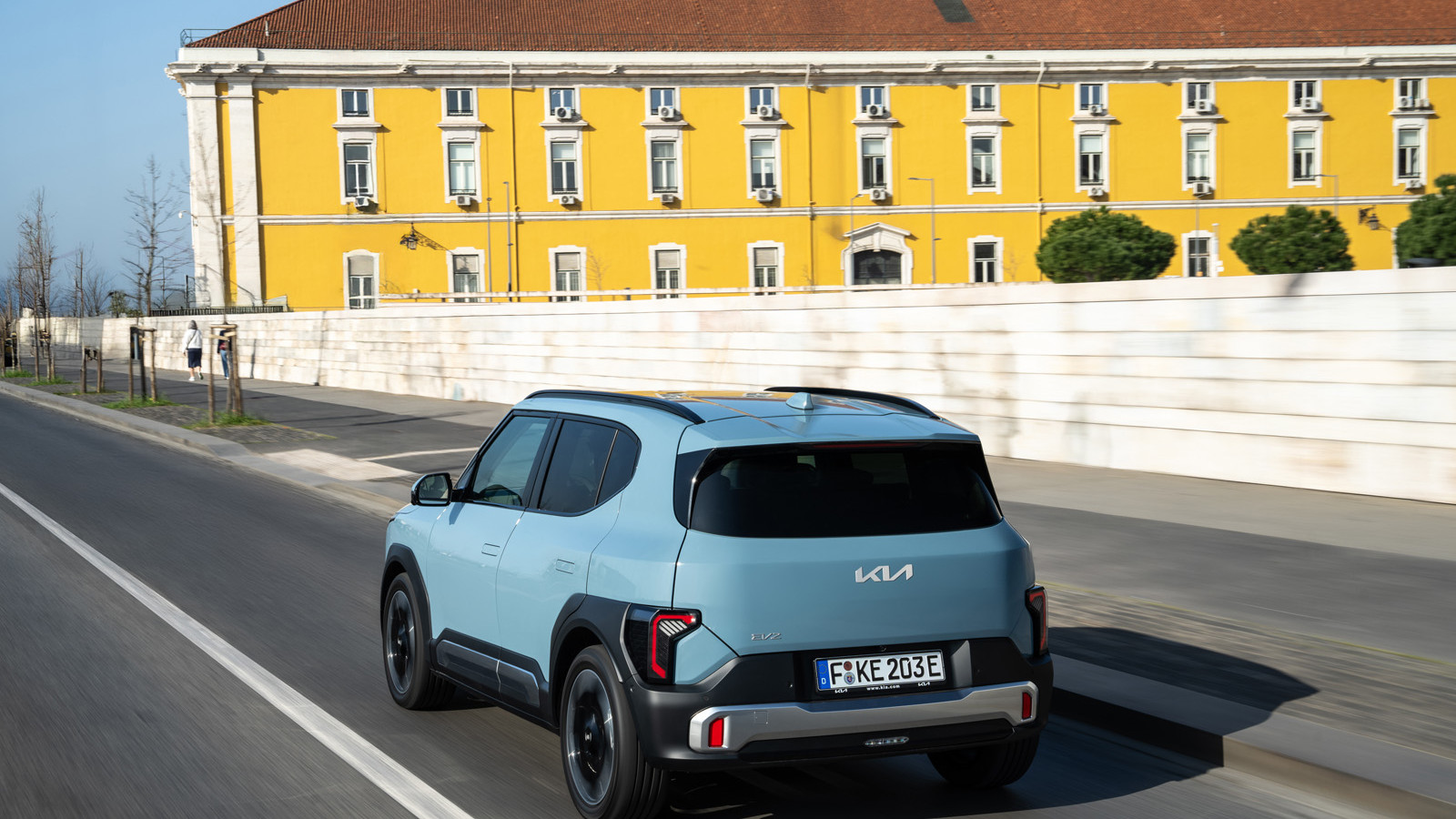
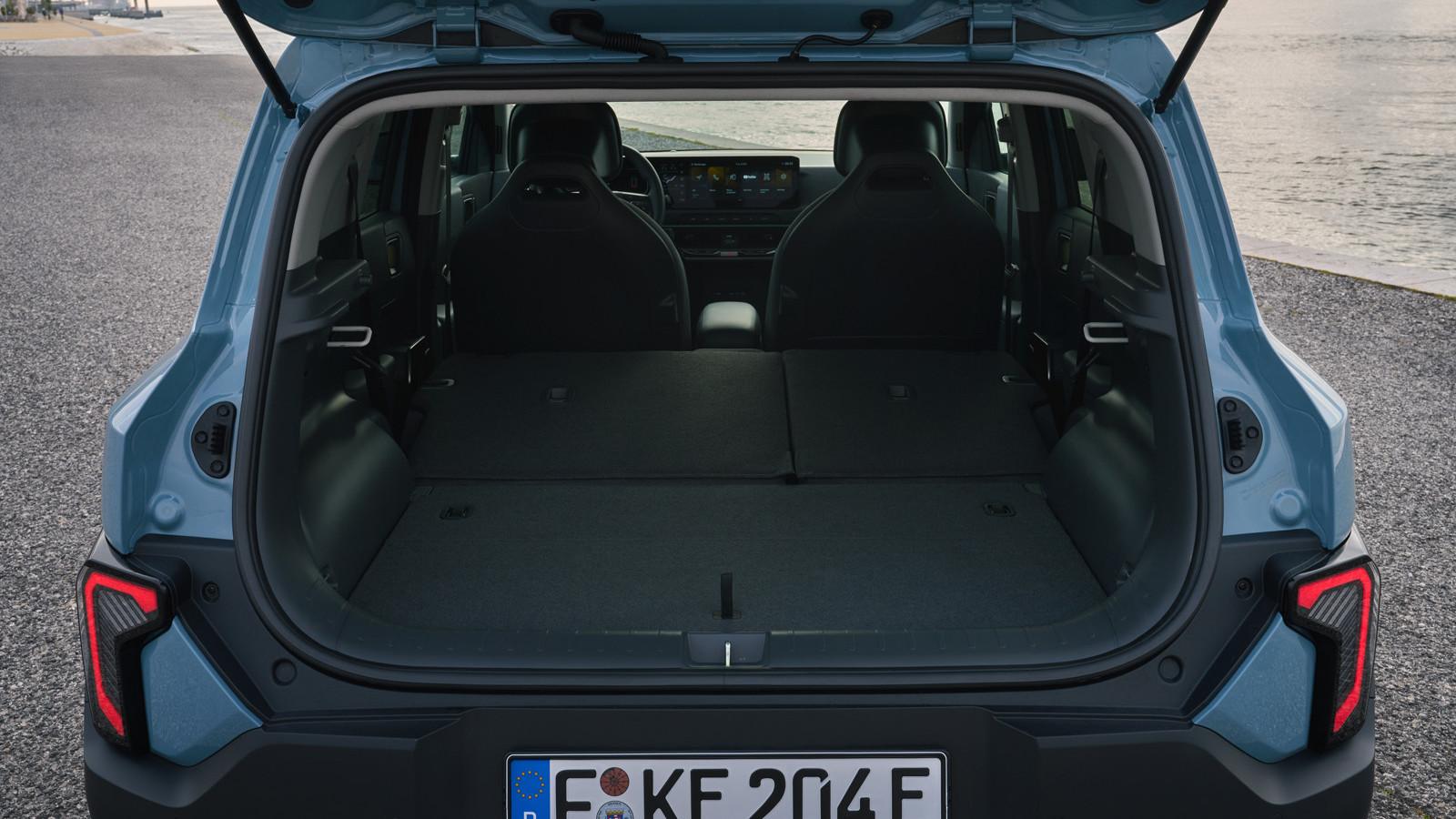
There’s 362 litres of boot space, plus some underfloor storage, but that’s some way off the 420 litres you get in the Renault 4. At least you get loads of storage compartments around the cabin.
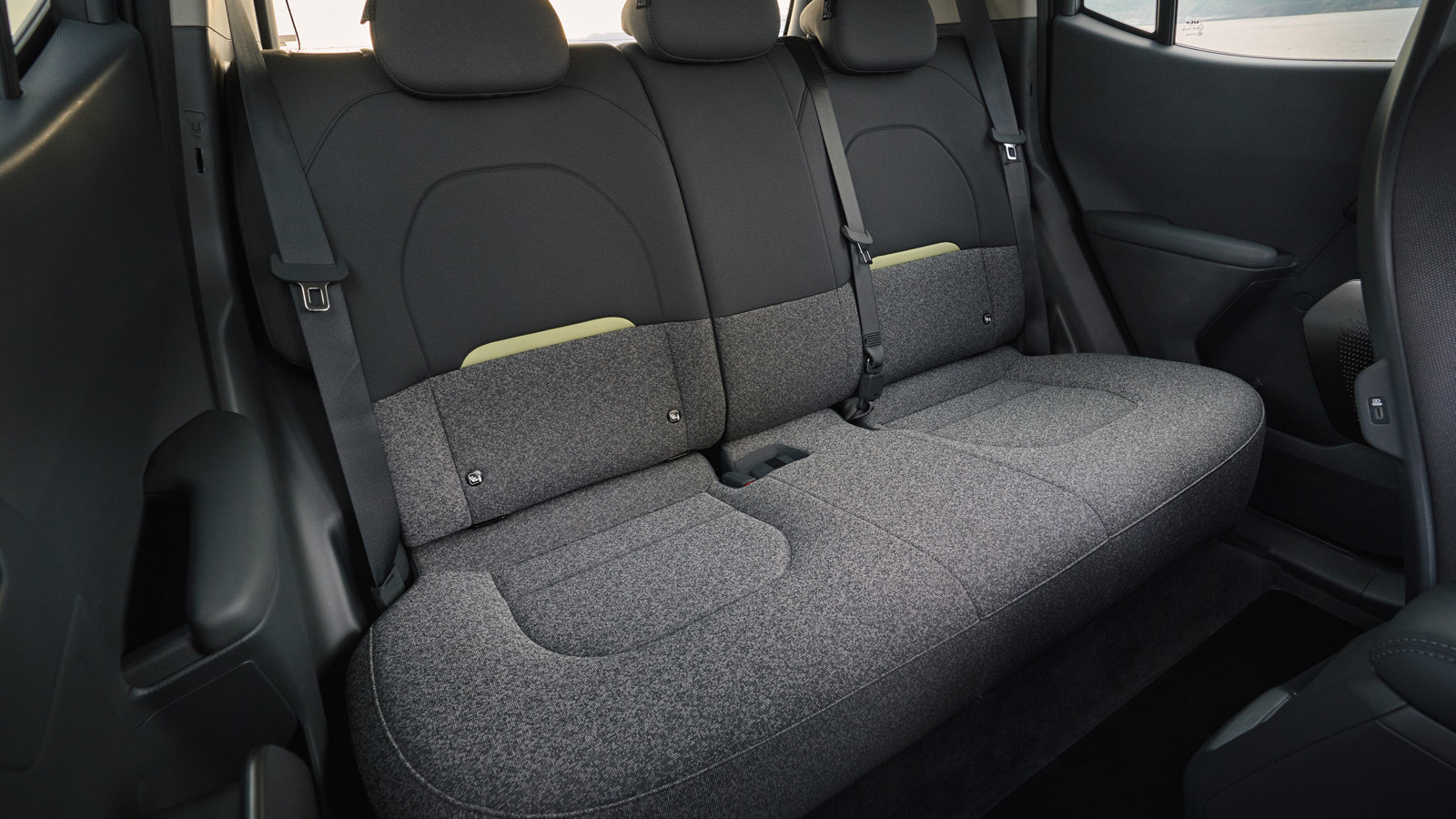
In the back, there’s just enough room for adults: headroom is fairly generous and I had just enough knee room to find a comfortable position, but those taller than 6ft might struggle. The middle seat of the five-seater is pretty snug but will be fine for short journeys.
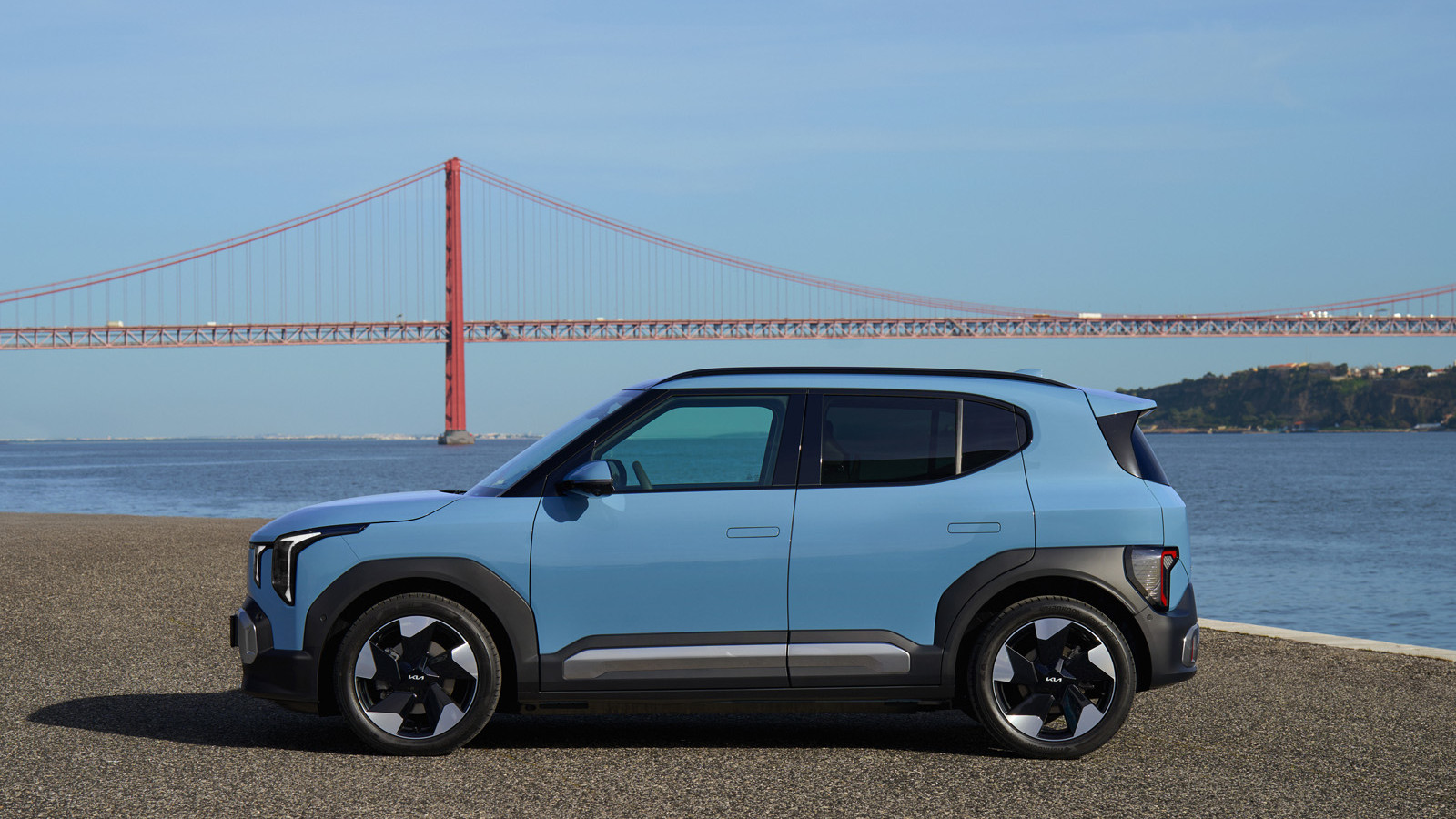
It may be more than 100mm shorter than the Epiq, but the EV2’s compact proportions don’t come at the expense of interior practicality. As standard, you get five seats, but there is a four-seater version with a sliding rear bench, which is helpful.
The entry-level Standard Range uses a smaller, 42.2kWh battery and can travel 317 km (197 miles) on a charge. Like the EV3, the EV2 uses a 400V electrical architecture that allows for a 10-80% charging time of less than 30 minutes and features both vehicle-to-grid and vehicle-to-load technology.
Two versions of the EV2 will be available. The Long Range comes fitted with a 61kWh battery, which is expected to yield a range of around 452km (281 miles), subject to official homologation. If achieved, this would put the EV2 right at the top of the class, upstaging the Epiq (430km/267 miles) and Renault 4 (401km/249 miles).
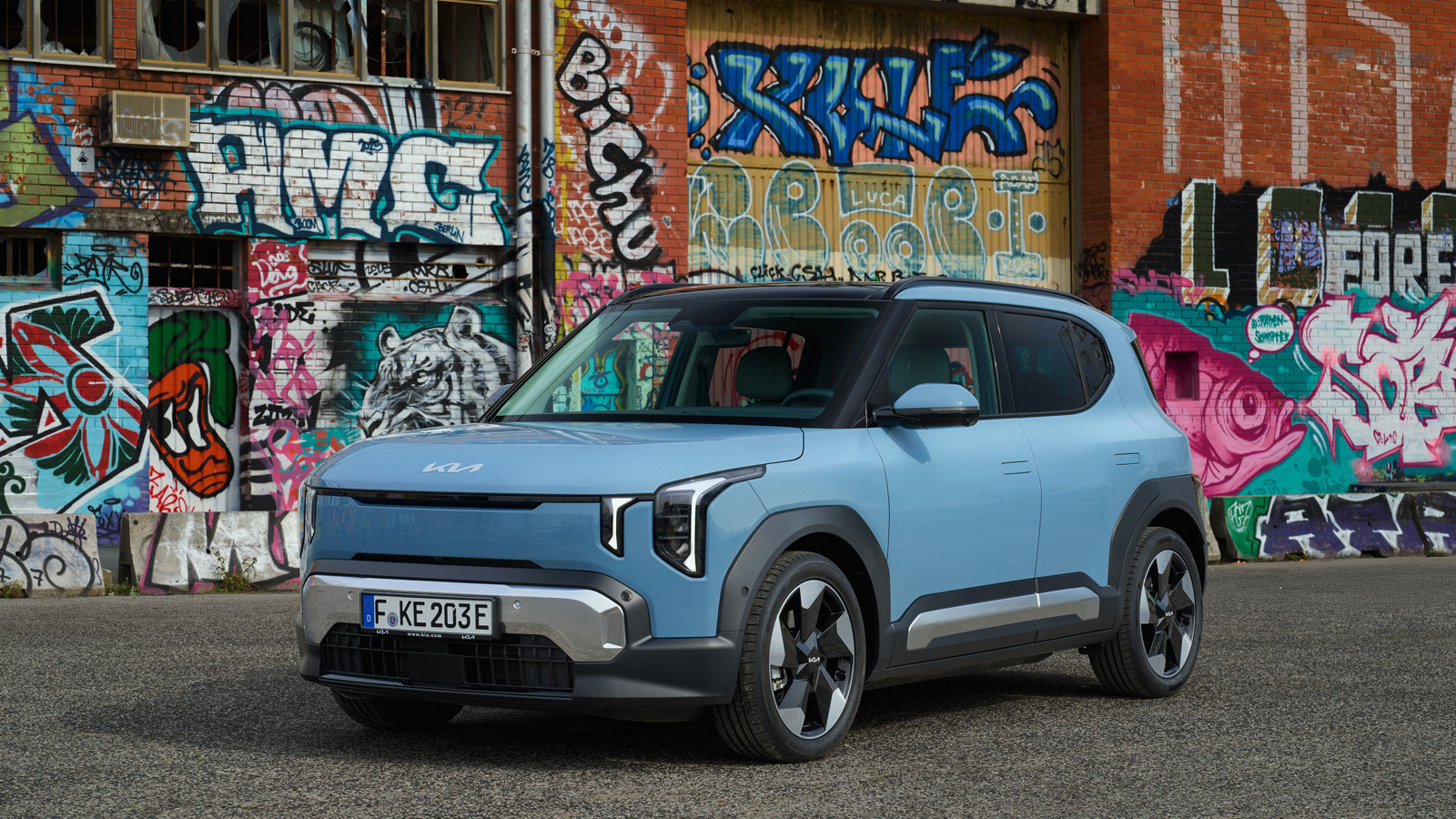
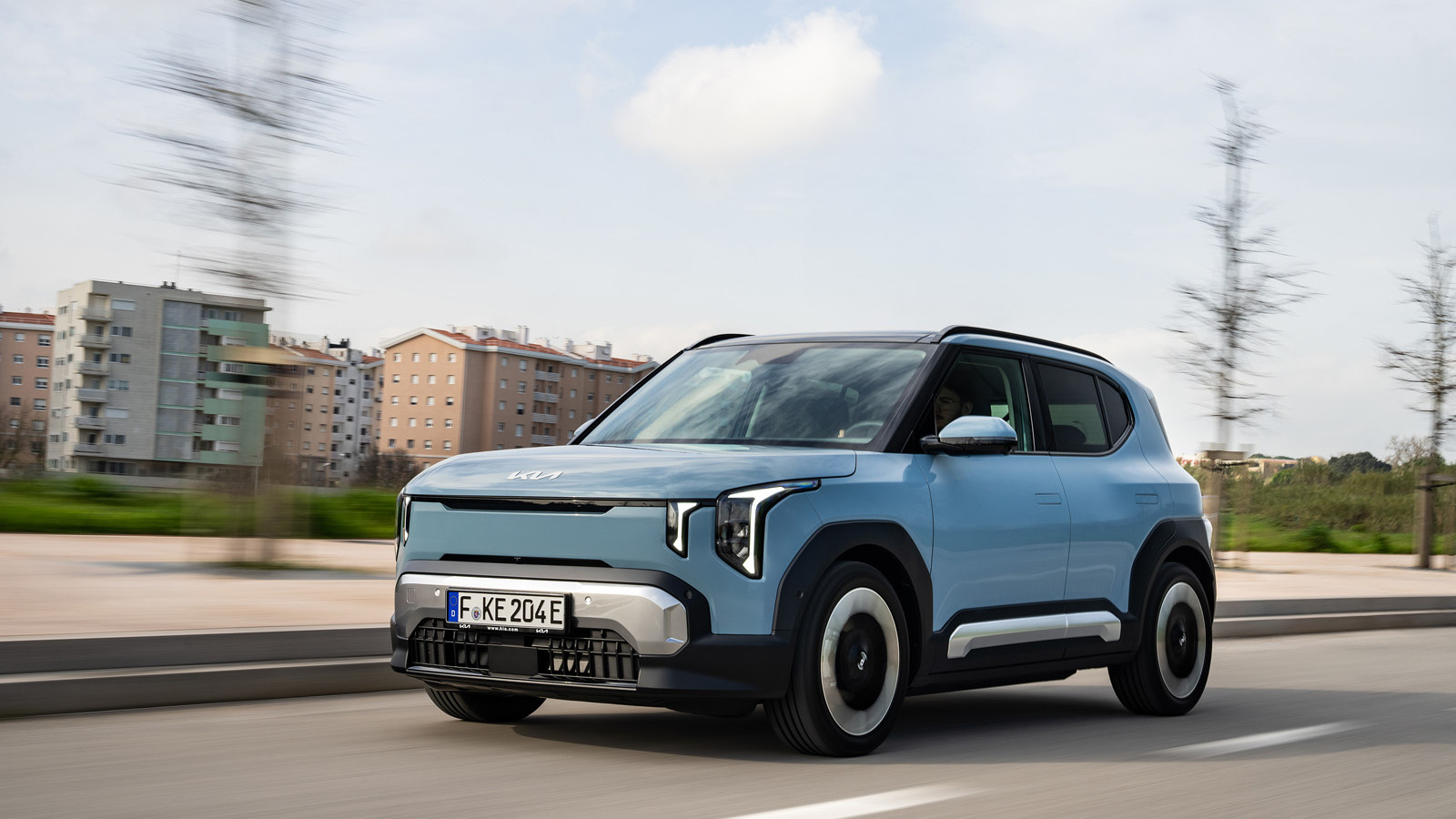
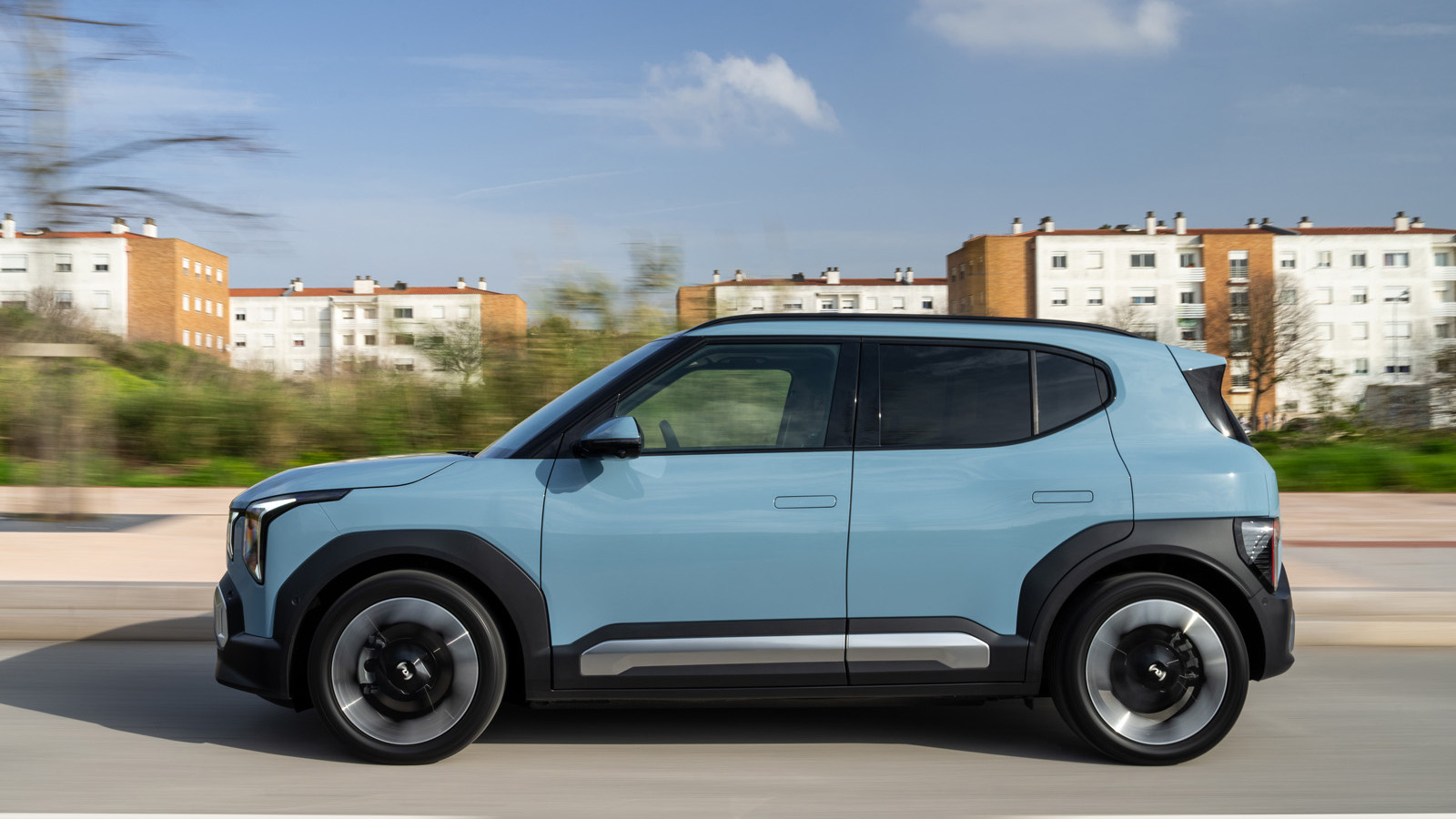
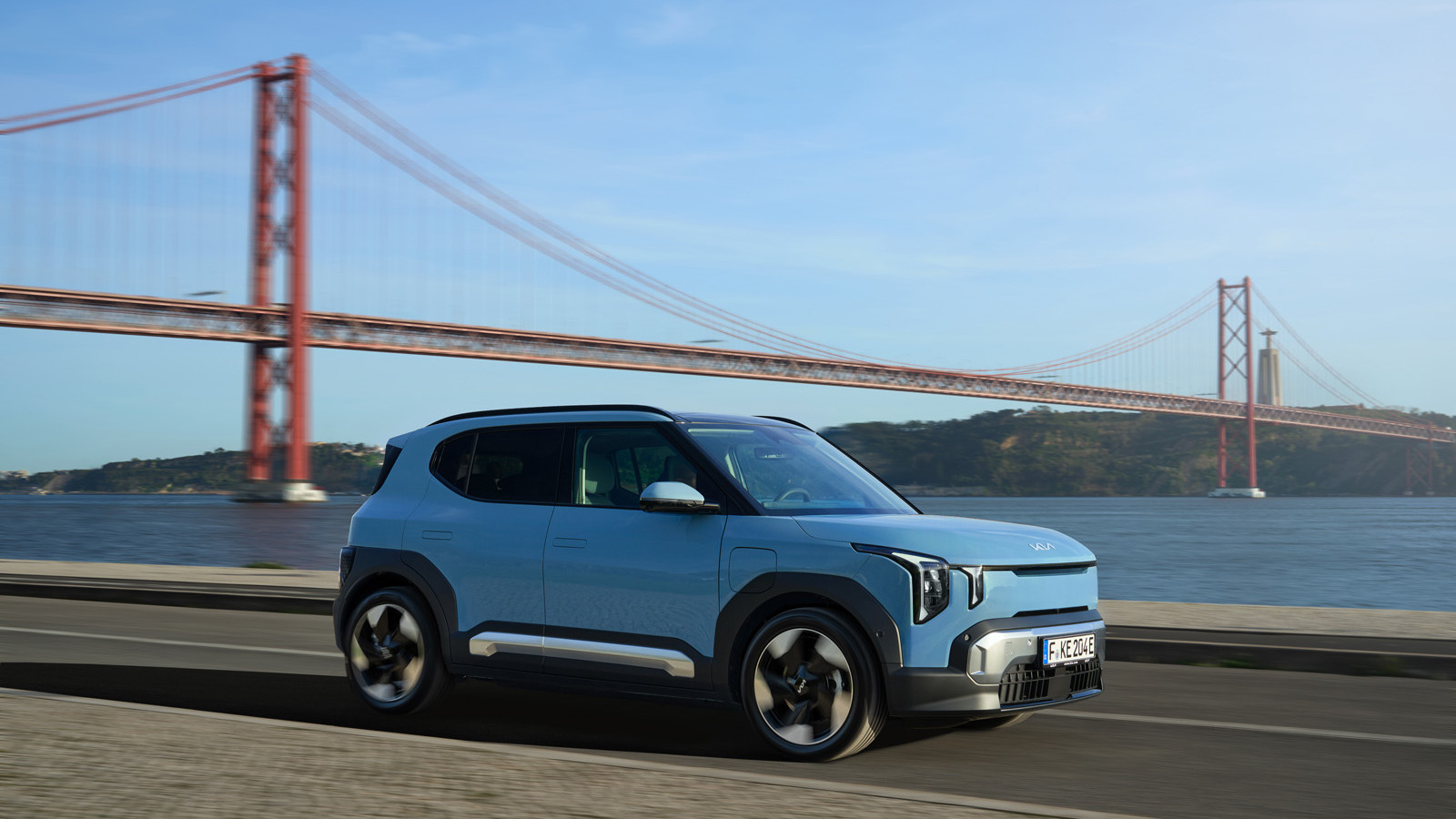
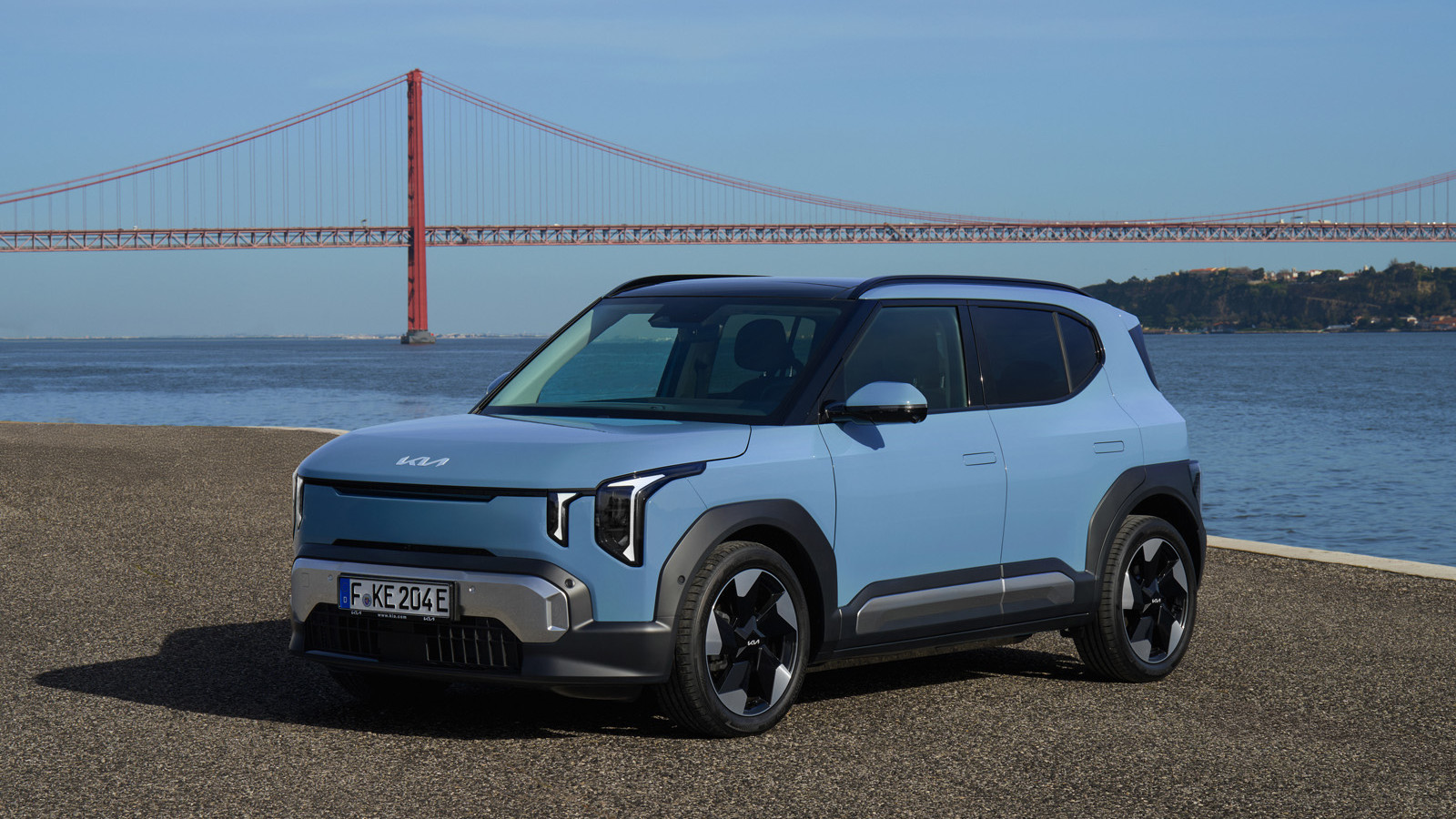
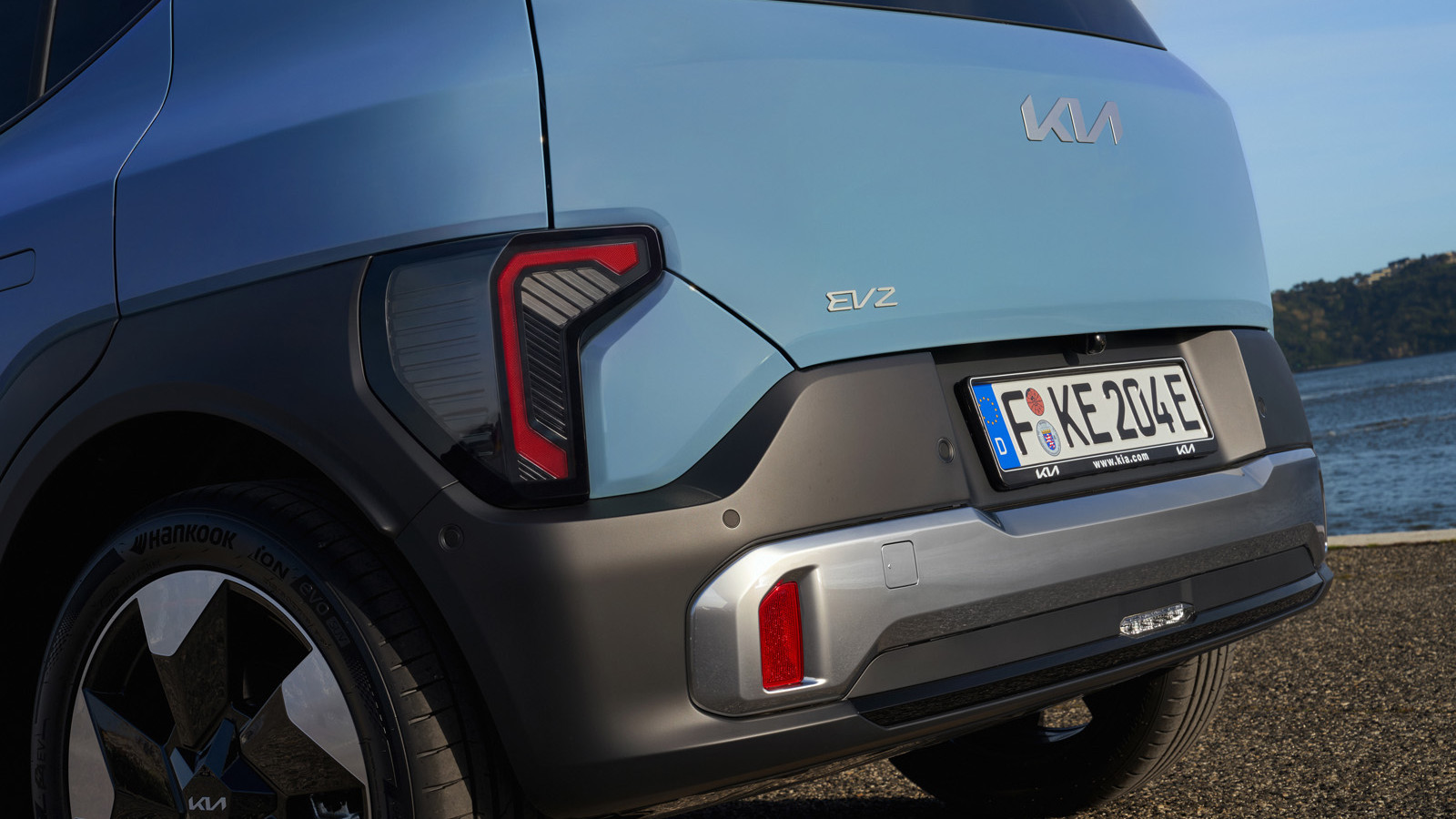
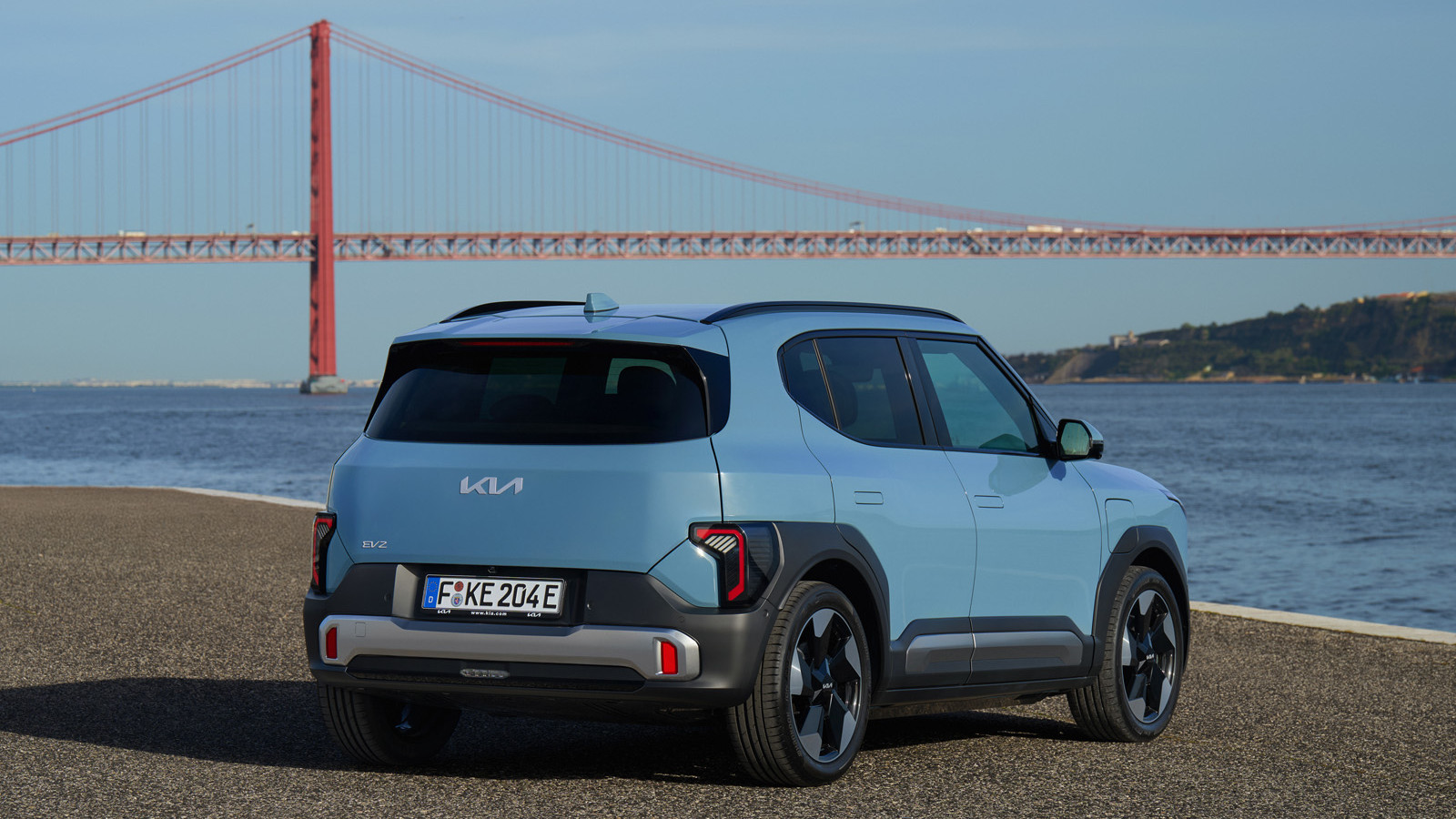
At 4060mm long, 1800mm wide and 1575mm tall, the EV2 is shorter than the Kia Stonic but slightly wider and lower than its combustion-engined counterpart. It looks like a shrunken EV5, sporting design hallmarks from its various larger siblings, with a boxy silhouette and a revised version of Kia’s ‘tiger nose’ front end.